Oviedo
69 points of interest
Campo de San Francisco (San Francisco Park)
Must seeAttraction/Landmark
Oviedo's beloved central park, a green oasis in the heart of the city with centuries-old trees, peacocks roaming freely, and romantic pathways — perfect for a leisurely stroll.
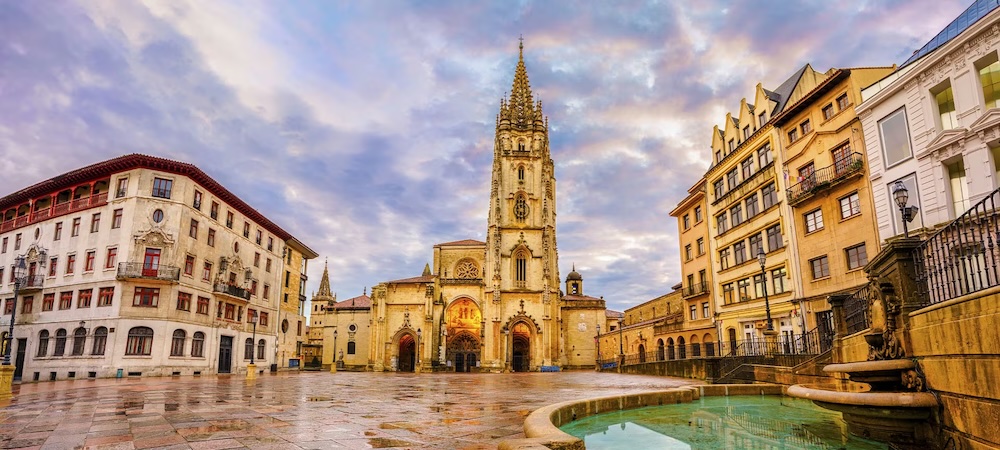
Cathedral of San Salvador
Must seeReligious
Oviedo's magnificent Gothic cathedral, built over centuries starting in the 14th century, houses the sacred Cámara Santa with relics that have drawn pilgrims along the Camino de Santiago for over a thousand years.
Museum of Fine Arts of Asturias
Must seeMuseum/Gallery
One of Spain's finest regional art museums, spanning three historic palaces and featuring works from El Greco, Zurbarán, Sorolla, and Dalí alongside an outstanding Asturian art collection.
Plaza del Fontán (Fontan Square)
Must seeAttraction/Landmark
One of Oviedo's most atmospheric squares, surrounded by colorful arcaded buildings and home to a centuries-old outdoor market. Its lively cafés and terraces make it a favorite gathering spot for locals.
San Miguel de Lillo Church
Must seeReligious
A UNESCO World Heritage gem perched on Mount Naranco, this 9th-century pre-Romanesque church built by King Ramiro I features extraordinary carved window jambs and is a masterpiece of Asturian architecture.
Santa Maria del Naranco Church
Must seeReligious
Originally built as a royal palace by King Ramiro I in 842 AD, this UNESCO World Heritage pre-Romanesque masterpiece on Mount Naranco is one of the most important early medieval buildings in Europe.
Acueducto de los Pilares (Aqueduct of the Pillars)
Attraction/Landmark
This 16th-century Renaissance aqueduct once carried water into Oviedo from the nearby hills, and its remaining stone arches stand as a striking reminder of the city's early engineering feats.
Antiguo Hospicio de Oviedo (Old Hospice of Oviedo)
Attraction/Landmark
This grand 18th-century Baroque building once served as a charitable hospice and is now the Hotel & Spa Reconquista, one of Spain's most prestigious historic hotels.
Archaeological Museum of Asturias
Museum/Gallery
Housed in the former Monastery of San Vicente, this museum showcases Asturian history from prehistoric cave dwellers to the medieval kingdom, with an impressive collection of pre-Romanesque artifacts.
Calle Uria (Uría Street)
Shopping
Oviedo's main commercial boulevard, lined with elegant 19th-century buildings, upscale shops, and lively cafés, serving as the vibrant heart of the city's modern life.
Capilla de la Balesquida (Balesquida Chapel)
Religious
This small 13th-century Gothic chapel, tucked into Oviedo's old quarter, was built for a medieval brotherhood and houses a revered image of the Virgin of Balesquida.
Capilla de las Esclavas del Sagrado Corazón (Chapel of the Handmaids of the Sacred Heart of Jesus)
Religious
A graceful Neo-Gothic chapel belonging to the Handmaids of the Sacred Heart religious order, featuring delicate stonework and a serene interior that offers a quiet retreat from the bustling city.
Casa Consistorial de Oviedo (Oviedo Town Hall )
Attraction/Landmark
Oviedo's stately Town Hall, built in the 17th century with a Baroque facade, presides over the bustling Plaza de la Constitución and remains the seat of the city's municipal government.
Casa de los Campomanes (House of the Campomanes Family)
Attraction/Landmark
A noble 17th-century manor house that belonged to the influential Campomanes family, whose most famous member, the Count of Campomanes, was a key figure in the Spanish Enlightenment.
Casa del Deán Payarinos (House of Dean Payarinos)
Attraction/Landmark
An elegant 18th-century residence that once belonged to a dean of Oviedo's cathedral, showcasing the refined Baroque architecture typical of the city's clerical elite.
Casas del Cuito
Attraction/Landmark
A charming row of traditional Asturian townhouses with colorful facades and covered galleries, offering a picturesque glimpse into Oviedo's 19th-century residential architecture.
Casona de Regla (House of Regla)
Attraction/Landmark
A stately medieval manor in Oviedo's old quarter, this historic stone building reflects the architectural heritage of the city's noble families and now hosts cultural exhibitions.
Corrada del Obispo (Bishop's Run Square)
Attraction/Landmark
A quaint medieval square nestled behind the cathedral, this intimate plaza was historically the bishop's private courtyard and remains one of Oviedo's most atmospheric corners.
Dama del Balcón (Lady of the Balcony)
Attraction/Landmark
A whimsical bronze sculpture by sculptor Óscar Álvariño depicting a woman leaning out from a balcony, part of Oviedo's beloved collection of urban sculptures scattered throughout the city.
El Fontán Market
Attraction/Landmark
A bustling traditional market where locals shop for fresh produce, Asturian cheeses, and regional delicacies, with a lively open-air market on Sundays in the surrounding arcaded plaza.
Encarna con Chiquitin (Embodied with a Little Boy)
Attraction/Landmark
A charming bronze sculpture depicting a local woman with a small child, capturing the warmth of everyday life in Oviedo and adding to the city's unique open-air sculpture gallery.
Esperanza Caminando (Walk of Hope)
Attraction/Landmark
A graceful bronze sculpture of a woman walking with quiet determination, created by artist Santiago de Santiago, embodying hope and resilience in one of Oviedo's central streets.
Fuente de Foncalada (Foncalada Fountain)
Attraction/Landmark
A UNESCO World Heritage Site and the only surviving civil engineering work from the pre-Romanesque Kingdom of Asturias, this 9th-century fountain was built by King Alfonso III to provide clean drinking water.
Galeria Vertice (Vertice Gallery)
Museum/Gallery
A contemporary art gallery showcasing works by emerging and established artists, offering a vibrant window into Asturias' thriving modern art scene.
Galería Texu (Texu Gallery)
Museum/Gallery
Named after the sacred yew tree of Asturian tradition, this gallery champions contemporary art with rotating exhibitions that highlight both local and international talent.
Guisandera (The Stew Pot)
Attraction/Landmark
A playful bronze sculpture paying tribute to the traditional Asturian woman who prepares fabada and other hearty stews, celebrating the region's rich culinary heritage.
Iglesia San Pedro de Los Arcos (Church of Saint Peter of the Arches)
Religious
A parish church with medieval origins that was rebuilt in the 18th century, known for its imposing Baroque tower and its role as the heart of the San Pedro de los Arcos neighborhood.
Iglesia de Las Siervas de Jesús (Church of the Servants of Jesus)
Religious
An elegant late 19th-century church built for the Servants of Jesus religious order, featuring a harmonious blend of Neo-Romanesque and eclectic architectural styles.
Iglesia de San Isidoro (San Isidoro Church)
Religious
A 17th-century Jesuit church dedicated to Saint Isidore of Seville, featuring an austere facade typical of the Counter-Reformation and a richly decorated Baroque interior.
Iglesia de San Juan el Real (Basilica of Saint John the Royal)
Religious
A grand 19th-century basilica where the famed author Leopoldo Alas 'Clarín' was baptized, known for its impressive Neo-Romanesque facade and luminous stained-glass windows.
Iglesia de San Tirso (Church of Saint Thyrsus)
Religious
One of Oviedo's oldest churches, originally built by King Alfonso II in the 9th century. Its east wall preserves a remarkable pre-Romanesque window, a rare survivor from the Asturian Kingdom era.
Iglesia de Santo Domingo (Church of Saint Dominic)
Religious
A striking 17th-century Dominican church with a commanding presence at the southern edge of Oviedo's old town, notable for its sober facade and spacious single-nave interior.
Iglesia del Sagrado Corazón (Church of the Sacred Heart of Jesus)
Religious
A beautiful Neo-Gothic church built in the early 20th century, distinguished by its soaring spire and intricate stonework that make it a recognizable landmark on Oviedo's skyline.
Junta General del Principado des Asturias (Parliament of the Principality of Asturias)
Attraction/Landmark
The seat of Asturias' regional parliament, housed in a grand neoclassical building from the 19th century that symbolizes the principality's political autonomy and democratic traditions.
La Gitana (The Gypsy Woman)
Attraction/Landmark
A striking bronze sculpture depicting a Romani woman, part of Oviedo's extensive collection of street art that turns the city's sidewalks into an open-air museum.
La Maternidad (The Motherhood)
Attraction/Landmark
A tender bronze sculpture by Fernando Botero depicting a voluptuous mother and child, showcasing the Colombian master's signature rounded style in one of Oviedo's most photographed artworks.
La Pensadora (The Thinker)
Attraction/Landmark
A contemplative bronze figure of a seated woman lost in thought, this sculpture adds a reflective note to Oviedo's rich outdoor art collection and invites passersby to pause and reflect.
La Regenta (The Regent)
Attraction/Landmark
A bronze statue honoring the protagonist of Leopoldo Alas 'Clarín's masterwork, considered one of the greatest Spanish novels. Oviedo itself was the model for the fictional city of Vetusta in the book.
Las Meninas (The Girls)
Attraction/Landmark
A playful sculptural reinterpretation of Velázquez's famous painting, these life-sized bronze figures bring the iconic ladies-in-waiting to Oviedo's streets in a delightful modern tribute.
Luis Riera Posada Statue
Attraction/Landmark
A monument honoring Luis Riera Posada, a distinguished Asturian politician and benefactor who played an important role in the development of early 20th-century Oviedo.
Mavi
Attraction/Landmark
A lifelike bronze sculpture of a young woman seated casually, blending seamlessly with passersby and embodying Oviedo's tradition of placing art where people least expect it.
Monasterio de San Pelayo (San Pelayo Convent)
Religious
A Benedictine convent founded in the 9th century, still home to an active community of nuns who sell their famous homemade pastries. Its imposing walls stand right beside the cathedral.
Monasterio de San Vicente (San Vicente Monastery)
Religious
Founded in 761 AD, this monastery is considered the birthplace of Oviedo itself. Its Romanesque cloister now houses the Archaeological Museum of Asturias, preserving centuries of regional history.
Muralla medieval de Oviedo (Medieval City Walls of Oviedo)
Attraction/Landmark
Remnants of the medieval fortifications that once encircled the old city, these ancient stone walls offer a tangible connection to Oviedo's origins as a fortified Asturian capital.
Museo de la Iglesia (Church Museum)
Museum/Gallery
Located within the cathedral complex, this museum displays a remarkable collection of religious art, sacred vestments, and medieval treasures including pieces from the Cámara Santa.
Palacio de Camposagrado (Camposagrado Palace)
Attraction/Landmark
An imposing 18th-century Baroque palace with a magnificent curving facade, once the residence of the Marquis of Camposagrado and now home to the Regional Court of Asturias.
Palacio de Congresos de Oviedo (Oviedo Congress and Exhibitions Center)
Attraction/Landmark
A striking modern convention center designed by renowned architect Santiago Calatrava, whose bold white structure and sweeping lines have become an iconic symbol of contemporary Oviedo.
Palacio de Valdecarzana-Heredia (Valdecarzana-Heredia Palace)
Attraction/Landmark
The oldest secular building in Oviedo, with origins in the 15th century, this Gothic-Renaissance palace retains medieval elements and now serves as the city's judicial headquarters.
Palacio de los Condes de Toreno (Palace of the Counts of Toreno)
Attraction/Landmark
A splendid 17th-century Baroque palace built for the Counts of Toreno, featuring an ornate facade with the family coat of arms and now serving as the headquarters of RIDEA, Asturias' royal institute.
Parque de Invierno (Winter Park)
Parks & Gardens
A sprawling hillside park south of the city center, offering panoramic views of Oviedo and the Cantabrian mountains along with wooded trails, playgrounds, and a peaceful escape from urban life.
Parroquia de San José de Pumarin (The Parish of Saint Joseph of Pumarín)
Religious
A mid-20th-century parish church serving the Pumarín neighborhood, reflecting the modernist architectural trends of post-Civil War Spain with its clean lines and functional design.
Plaza Dolores Medio (Dolores Medio Square)
Attraction/Landmark
A square named after the celebrated Asturian novelist Dolores Medio, whose realistic portrayals of post-war Spain earned her a place among the region's most distinguished literary figures.
Plaza Porlier De Oviedo. Sculpture of the Traveler
Attraction/Landmark
Home to Eduardo Urculo's iconic 'El Viajero' sculpture, this elegant plaza features a bronze traveler with suitcases who has become one of Oviedo's most beloved and photographed figures.
Plaza Trascorrales. La Lechera (The Milkmaid)
Attraction/Landmark
A charming bronze sculpture of a traditional milkmaid in the lively Plaza Trascorrales, paying homage to the rural women who once brought fresh milk from the Asturian countryside to sell in the city.
Plaza Trascorrales. La Pescadera (The fishwife)
Attraction/Landmark
A lively bronze sculpture of a fishmonger woman, celebrating the hardworking market vendors who have been a cornerstone of Oviedo's commercial life for centuries.
Plaza de España (Spain Square)
Attraction/Landmark
A grand formal square anchored by the imposing Diputación Provincial building, serving as a gateway between the modern Ensanche district and the charming streets of old Oviedo.
Plaza de Feijóo (Feijoo Square)
Attraction/Landmark
A peaceful square in the old quarter named after the Enlightenment monk Benito Jerónimo Feijóo, surrounded by medieval walls and offering a tranquil spot to enjoy the historic atmosphere.
Plaza de la Constitución (Constitution Square)
Attraction/Landmark
Oviedo's main civic square, presided over by the elegant Town Hall and the Church of San Isidoro, long serving as the center of public life and political gatherings in the city.
Plaza de toros de Buenavista (Buenavista Bullring)
Attraction/Landmark
A historic Neo-Mudéjar bullring built in 1889, one of the finest in northern Spain, now also hosting concerts and cultural events alongside its traditional bullfighting season.
Plaza del Carbayón. Concord Monument
Attraction/Landmark
Named after the legendary giant oak tree (carbayón) that once stood here as a symbol of Oviedo, this square features a monument to concord celebrating the city's spirit of harmony and coexistence.
Plaza del Paraguas (Umbrella Square)
Attraction/Landmark
A quirky covered square named for its distinctive umbrella-shaped canopy, sheltering a sunken plaza that serves as a lively meeting point and a nod to Oviedo's famously rainy weather.
San Julián de los Prados Church
Religious
A UNESCO World Heritage pre-Romanesque basilica from the early 9th century, also known as Santullano, containing the largest surviving ensemble of Roman-inspired frescoes from early medieval Europe.
Statue of Archbishop Fernando de Valdés Salas
Attraction/Landmark
A statue honoring the powerful 16th-century Archbishop who served as Inquisitor General of Spain and founded the University of Oviedo, leaving a lasting mark on both the city and Spanish history.
Statue of Mafalda
Monument
A delightful bronze statue of Quino's beloved comic strip character Mafalda, seated on a bench on Calle Uría, inviting visitors to sit beside her for a photo with this iconic Argentine creation.
Teatro Campoamor (Campoamor Theatre)
Attraction/Landmark
Oviedo's premier performing arts venue, famous worldwide as the host of the annual Princess of Asturias Awards ceremony. This elegant 19th-century theater also stages opera, ballet, and concerts year-round.
Vendedor de Pescado (Fish Seller)
Attraction/Landmark
A vivid bronze sculpture of a fishmonger carrying his wares, celebrating the tradition of fresh seafood trade that has connected Oviedo to the nearby Cantabrian coast for centuries.
Vendedoras del Fontán (Sellers of the Fontán)
Attraction/Landmark
A lively bronze sculpture group depicting the market women of the Fontán, immortalizing the spirited vendors who have been the soul of this historic marketplace for generations.
Villa Magdalena
Attraction/Landmark
An exquisite Modernist mansion from the early 20th century, showcasing the Art Nouveau influences that briefly flourished in Oviedo's architectural landscape during the city's industrial boom.
Woody Allen Statue
Attraction/Landmark
A life-sized bronze statue of filmmaker Woody Allen strolling down the street, installed after he declared Oviedo a 'delicious city' — one of the most popular photo spots in town.