Bilbao
38 points of interest
Catedral de Santiago (Santiago Cathedral)
Must seeReligious
The oldest church in Bilbao dating back to the 14th century, the Cathedral of Santiago is a Gothic gem in the heart of the Casco Viejo, featuring a beautiful 16th-century cloister, a Renaissance portico, and a serene interior that marks a stop on the Camino de Santiago pilgrimage route.
Mercado de la Ribera (Ribera Market)
Must seeAttraction/Landmark
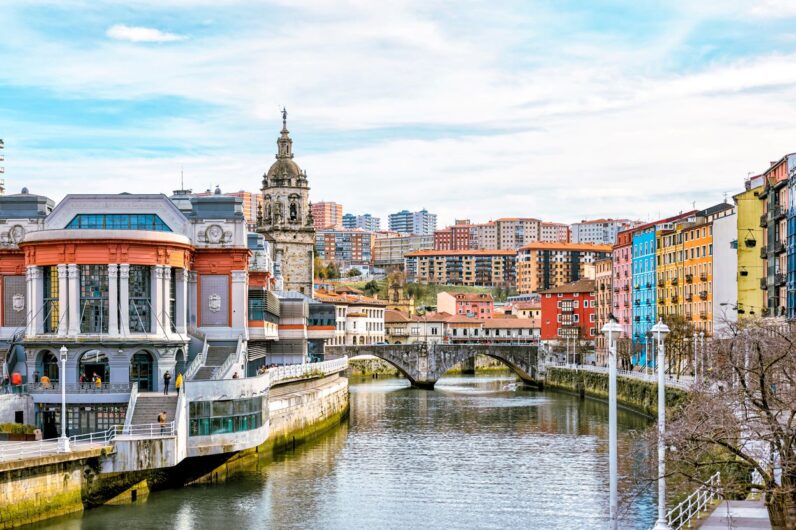
The largest covered market in Europe, the Mercado de la Ribera is a stunning Art Deco building on the banks of the Nervión River, where three floors overflow with fresh Basque produce, pintxo bars, and local delicacies, recognized by the Guinness Book of Records for its impressive size.
Museo Guggenheim Bilbao (Guggenheim Museum Bilbao)
Must seeMuseum/Gallery
Frank Gehry's titanium-clad masterpiece that transformed Bilbao from an industrial city into a world-class cultural destination, the Guggenheim Museum is an architectural icon housing rotating exhibitions of modern and contemporary art, surrounded by monumental outdoor sculptures including Jeff Koons' giant floral Puppy.
Museo de Bellas Artes de Bilbao (Bilbao Fine Arts Museum)
Must seeMuseum/Gallery
One of Spain's finest art museums, the Bilbao Fine Arts Museum houses an outstanding collection spanning from medieval masters to contemporary art, including works by El Greco, Goya, Zurbarán, Gauguin, and Francis Bacon, set in a modern building surrounded by the beautiful Casilda Iturrizar Park.
Plaza Nueva (New Square)
Must seeAttraction/Landmark
A perfectly symmetrical neoclassical arcaded square completed in 1851, the Plaza Nueva is the social heart of Bilbao's Casco Viejo, its covered walkways lined with beloved pintxo bars and traditional taverns, hosting a lively Sunday morning flea market and serving as the epicenter of local festivals.
Zubizuri (White Bridge)
Must seeAttraction/Landmark
A graceful pedestrian bridge designed by Santiago Calatrava in 1997, the Zubizuri — meaning 'white bridge' in Basque — arcs elegantly over the Nervión River with its distinctive curved white steel structure and translucent glass floor, becoming one of Bilbao's most recognizable symbols of urban renewal.
Azkuna Zentroa (Azkuna Centre)
Attraction/Landmark
A former wine warehouse transformed into a stunning multidisciplinary cultural center by designer Philippe Starck, the Azkuna Zentroa features 43 uniquely designed columns in its atrium, along with a cinema, exhibition halls, a rooftop swimming pool with a glass floor, and a library.
Basilica de Nuestra Senora de Begona (Basilica of Begona)
Religious
Perched on a hilltop overlooking Bilbao, this 16th-century Gothic basilica is dedicated to the patron saint of Biscay, housing a revered medieval statue of the Virgin of Begoña and offering panoramic views of the city from its elevated position, reached by a climb through the old town or a scenic elevator.
Biblioteca Municipal de Bidebarrieta (Bidebarrieta Municipal Library)
Attraction/Landmark
An elegant 19th-century neoclassical building originally designed as a concert hall and society meeting place, the Bidebarrieta Library now houses Bilbao's main public library, featuring a grand main hall with ornate ceiling frescoes and a sweeping marble staircase.
Bizkaia Museo Arqueologico (Bizkaia Museum of Archaeology)
Museum/Gallery
Housed in a beautifully restored former Jesuit cloister in the heart of the Casco Viejo, this archaeology museum traces the history of Biscay from prehistoric cave dwellers to the medieval period through an engaging collection of artifacts, tools, and interactive displays.
Casa Consistorial de Bilbao (Bilbao City Hall)
Attraction/Landmark
A grand Baroque-style civic building completed in 1892, Bilbao's City Hall stands on the banks of the Nervión River with an elegant facade featuring a central balcony, ornate stonework, and a clock tower, symbolizing the city's prosperity during its industrial golden age.
Estacion de Bilbao Concordia (Bilbao-Concordia Railway Station)
Attraction/Landmark
A stunning Art Nouveau railway station built in 1902, Bilbao-Concordia features a richly decorated facade with colorful ceramic tiles, ornate ironwork, and stained glass windows, serving as the terminal for the narrow-gauge FEVE line and standing as one of the finest modernist buildings in the Basque Country.
Gran Vía (Grand Avenue)
Shopping
Bilbao's most elegant boulevard, the Gran Vía de Don Diego López de Haro stretches from Plaza Circular to the Sagrado Corazón park, lined with upscale shops, grand 19th-century buildings, and important landmarks including the ornate Plaza Moyua and the Palacio de la Diputación.
Iglesia de San Anton (Church of Saint Anthony the Great)
Attraction/Landmark
One of Bilbao's most iconic landmarks, the Church of San Antón dates from the 15th century and sits beside the bridge of the same name over the Nervión River, together forming the image that appears on the city's coat of arms and one of the most photographed scenes in the old town.
Iglesia de San Francisco de Asis (Church of Saint Francisco de Asis)
Religious
A grand neo-Gothic church built in the late 19th century, the Church of San Francisco de Asís stands in the Abando district with its impressive twin spires, richly decorated interior with stained glass windows, and a monumental facade that dominates the surrounding streetscape.
Iglesia de San Nicolas (Church of Saint Nicholas)
Religious
A Baroque church dedicated to the patron saint of sailors, the Church of San Nicolás sits at the edge of the Casco Viejo near the Arenal, featuring a distinctive octagonal plan, an elaborate retablo, and a lively square in front that serves as a gateway between the old and new towns.
Iglesia de San Vicente de Abando (Church of Saint Vicente de Abando)
Religious
A neo-Gothic church built in the early 20th century in the Ensanche district, the Church of San Vicente de Abando features a soaring bell tower, elegant pointed arches, and a luminous interior, standing as an architectural landmark near the busy Plaza del Sagrado Corazón.
Iglesia de los Santos Juanes (Saint Johns' Church)
Religious
A 16th-century Baroque church in the Casco Viejo originally belonging to a Jesuit complex, the Church of Santos Juanes features an impressive altarpiece, a grand Baroque facade, and a rich interior that reflects the wealth and influence of the Jesuit order in the Basque Country.
Iglesia del Sagrado Corazon (Church of the Sacred Heart)
Attraction/Landmark
A monumental Jesuit church built in the early 20th century in eclectic style, the Church of the Sacred Heart dominates the Ensanche skyline with its towering facade and spacious nave, featuring impressive stained glass windows and a dramatic altarpiece dedicated to the Sacred Heart of Jesus.
Itsasmuseum Bilbao (Bilbao Maritime Museum)
Museum/Gallery
Located on the site of the former Euskalduna shipyard, Bilbao's Maritime Museum combines indoor galleries with an open-air exhibition area along the estuary, showcasing the deep connection between the Basque Country and the sea through historic vessels, shipbuilding tools, and interactive maritime displays.
Mount Artxanda and Artxanda Funicular
Attraction/Landmark
A scenic funicular railway that has been whisking passengers to the top of Mount Artxanda since 1915, offering the most spectacular panoramic views of Bilbao's skyline, the Guggenheim, and the surrounding green mountains, with a hilltop park featuring restaurants, a sports complex, and walking trails.
Museo Vasco (Basque Museum)
Museum/Gallery
Housed in a 17th-century Jesuit college in the Casco Viejo, the Basque Museum offers a comprehensive journey through Basque culture and history, from prehistoric tools and Roman artifacts to traditional fishing and pastoral life, with a highlight being the Mikeldi idol, an Iron Age stone boar.
Museo de Arte Sacro de Bilbao (Diocesan Museum of Sacred Art of Bilbao)
Museum/Gallery
Set within the former Convent of the Encarnación, this museum showcases a remarkable collection of religious art spanning from the 12th to the 20th century, including Romanesque sculptures, Gothic silverwork, Baroque paintings, and liturgical vestments from churches across the Basque Country.
Museo de Reproducciones de Bilbao (Reproductions Museum of Bilbao)
Museum/Gallery
A unique museum housed in a former church, the Reproductions Museum displays faithful plaster casts and replicas of masterpieces from ancient Greek, Roman, and Renaissance sculpture, offering visitors the chance to study iconic works from the Louvre, Vatican, and British Museum without leaving Bilbao.
Palacio Chavarri (Chavarri Palace)
Attraction/Landmark
An exuberant eclectic palace built in 1894 for industrialist Víctor Chávarri, this lavish building showcases a richly ornamented facade with Neo-Flemish and Neo-Renaissance elements, now serving as the seat of the Basque Government's Sub-delegation in Biscay.
Palacio Euskalduna (Euskalduna Conference Centre and Concert Hall)
Attraction/Landmark
A massive modern conference and concert venue built in 1999 on the site of the last great Bilbao shipyard, the Euskalduna Palace's rusted steel exterior deliberately evokes a ship under construction, hosting opera, symphony concerts, and international congresses as part of the city's cultural renaissance.
Palacio de la Diputacion Foral de Vizcaya (Biscay Foral Delegation Palace)
Attraction/Landmark
An imposing eclectic-style government palace built between 1890 and 1900, the seat of the Biscay Provincial Council features a grand staircase, ornate stained glass windows, and richly decorated halls that reflect the wealth and political importance of the Basque provinces during the industrial era.
Parque Casilda Iturrizar (Casilda Iturrizar Park)
Parks & Gardens
Bilbao's most cherished urban park, named after the philanthropist Casilda Iturrizar who donated the land, this green oasis beside the Fine Arts Museum features a duck pond, a pergola, elegant fountains, tree-lined promenades, and a charming carousel, offering a peaceful retreat from the bustling city.
Parque Etxebarria (Etxebarria Park)
Parks & Gardens
A hillside park built on the site of a former iron foundry, Etxebarria Park still preserves its industrial chimney as a landmark while offering expansive lawns, playgrounds, and some of the best free panoramic views of Bilbao's old town, the Guggenheim, and the surrounding mountains.
Plaza Circular (Circular Square)
Attraction/Landmark
A major traffic roundabout and urban landmark that marks the boundary between the Casco Viejo and the Ensanche, Plaza Circular is anchored by the monument to the founder of Bilbao, Don Diego López de Haro, and surrounded by grand 19th-century buildings including the iconic BBVA headquarters.
Plaza Miguel Unamuno (Miguel Unamuno Square)
Attraction/Landmark
A lively square in the heart of the Casco Viejo named after the famous Bilbao-born philosopher and writer Miguel de Unamuno, flanked by the Basque Museum and the Church of Santos Juanes, and serving as a popular gathering spot surrounded by pintxo bars and traditional Basque taverns.
Plaza Moyua (Moyua Square)
Attraction/Landmark
An elegant elliptical square at the heart of the Ensanche district, Plaza Moyua features a central fountain surrounded by manicured gardens, ringed by grand Belle Époque buildings including the iconic Hotel Carlton, and serves as the intersection of Bilbao's most prestigious boulevards.
Puente de La Salve (La Salve Bridge)
Attraction/Landmark
A striking cable-stayed bridge spanning the Nervión River right next to the Guggenheim Museum, the Puente de La Salve was enhanced in 2007 with Daniel Buren's bold red arch installation called 'Arcos Rojos', creating a dramatic gateway that frames the titanium museum from across the water.
Puente de San Anton (San Anton Bridge)
Attraction/Landmark
One of the oldest and most symbolic bridges in Bilbao, the Puente de San Antón appears alongside its neighboring church on the city's coat of arms, with origins dating back to the 15th century, connecting the Casco Viejo across the Nervión River in a scene that defines Bilbao's historic identity.
Puppy
Attraction/Landmark
Jeff Koons' beloved 12-meter-tall West Highland Terrier sculpture covered in over 38,000 living flowers, Puppy has stood guard at the entrance of the Guggenheim Museum since 1997, becoming an unofficial mascot of Bilbao and one of the most photographed public artworks in the world.
Teatro Arriaga (Arriaga Theatre)
Attraction/Landmark
A magnificent Neo-Baroque opera house built in 1890 and named after the Bilbao-born composer Juan Crisóstomo de Arriaga, known as the 'Spanish Mozart', the Teatro Arriaga stands at the entrance to the Casco Viejo with its lavish facade, ornate interior, and a year-round program of opera, theatre, and dance.
Torre Iberdrola (Iberdrola Tower)
Attraction/Landmark
The tallest building in the Basque Country at 165 meters, the Iberdrola Tower was designed by Argentine architect César Pelli and completed in 2012, its sleek triangular glass form rising elegantly along the Nervión waterfront and symbolizing Bilbao's transformation into a modern, forward-looking city.
Universidad de Deusto (University of Deusto)
Attraction/Landmark
One of Spain's most prestigious private universities, founded by the Jesuits in 1886, the University of Deusto sits directly across the Nervión from the Guggenheim Museum, its grand Neo-Gothic main building beautifully illuminated at night and reflected in the river alongside a modern library addition.