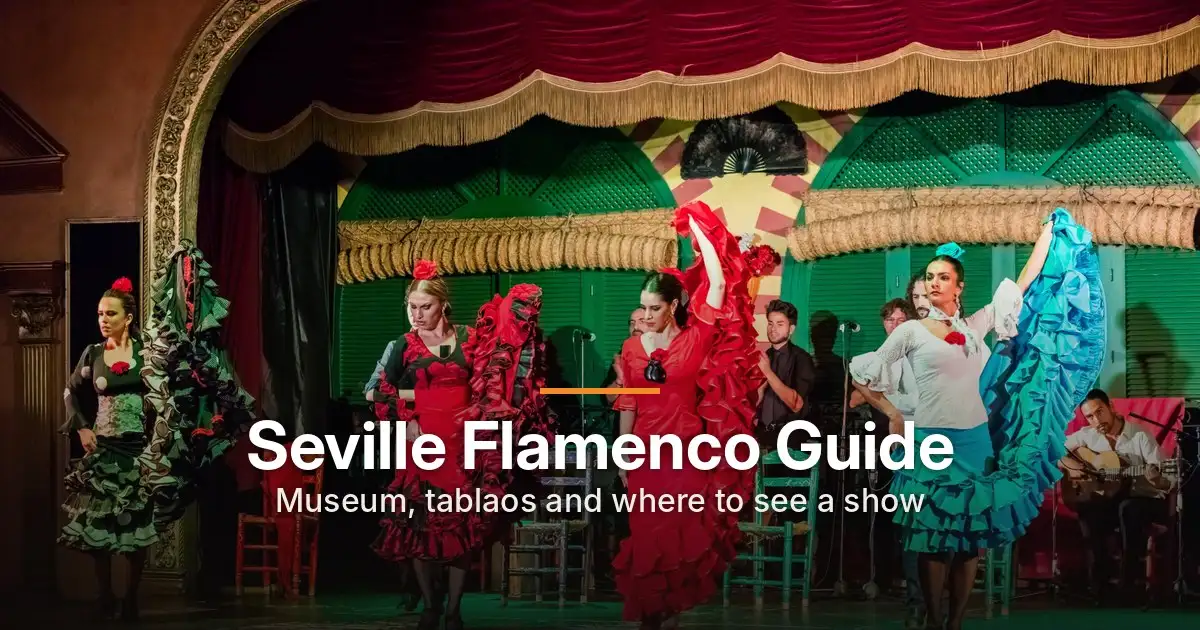
Flamenco is everywhere in Seville. You hear it drifting out of bars in Santa Cruz, you see it in the shop windows full of fans and castanets, and you feel it in Triana, the riverside neighbourhood that gave the art some of its greatest singers and dancers. But if it's your first visit, the choice can be confusing: a museum or a show? A big tablao or a tiny bar? This guide covers the flamenco museum in Seville, the best-known tablaos, and how to string them together into a self-guided evening on foot.
Why Seville is the home of flamenco
Flamenco grew up in Andalusia, and Seville, together with Jerez and Cádiz, sits at the heart of it. In 2010 UNESCO added flamenco to its list of the Intangible Cultural Heritage of Humanity. In Seville it is not a tourist add-on: it lives in neighbourhood peñas, in family traditions in Triana, and in the Bienal de Flamenco, one of the most important flamenco festivals in the world, held in the city every two years.
Flamenco has three pillars: cante (song), baile (dance) and toque (guitar), with palmas (rhythmic hand-clapping) holding it all together. Knowing that before you go makes any show far more rewarding.
The flamenco museum in Seville: Museo del Baile Flamenco
If you only do one flamenco thing in Seville during the day, make it the Museo del Baile Flamenco. It was founded by the legendary dancer Cristina Hoyos and sits in a historic building in the old town, a short walk from the cathedral and the Santa Cruz quarter.
The museum focuses on the dance itself. Expect:
- The history of flamenco, from its roots to its modern stars
- The different styles (palos), explained with music and video, so you can tell a festive alegrías from a deep, serious soleá
- Costumes and objects that show how the look of flamenco has changed over time
The museum also stages live performances, which makes it a good choice if you want context and a show in the same place. Check its official website for current times and tickets before you go.
Tip: visit the museum in the afternoon and see a show that same evening. Everything you learned about rhythm and styles will click once you see it live.
Where to see flamenco in Seville: the tablaos
A tablao is a venue dedicated to flamenco performance, usually with a small stage and seating close to the artists. Seville has several, and each has its own character.
Los Gallos (Santa Cruz)
On the pretty Plaza de Santa Cruz, Los Gallos is one of the longest-running tablaos in Seville. It is an intimate room focused on the performance, and its location makes it easy to combine with an evening stroll through the narrow lanes of the old Jewish quarter.
Tablao Flamenco El Arenal
In the El Arenal district, close to the river and the Maestranza bullring, Tablao El Arenal is set in a traditional building and is a popular choice if you want to pair dinner or drinks with the show.
Casa de la Memoria
Casa de la Memoria is a small, cultural venue in the centre. Shows are close-up and unamplified in feel, which is exactly what many flamenco fans look for. With limited seats, it pays to book ahead.
La Carbonería (for a casual night)
Tucked away in Santa Cruz, La Carbonería is a bar rather than a tablao. It is known for its free-entry nightly flamenco, a relaxed, bohemian atmosphere and a crowd of locals and travellers. Arrive early if you want a spot near the stage.
Triana: the neighbourhood of flamenco
Cross the Puente de Triana (Isabel II Bridge) and you are in the barrio that many consider the soul of Sevillian flamenco. Generations of Gitano families from Triana shaped the art, and the area still has peñas and bars where flamenco is part of everyday life.
By day, Triana is great for a walk:
- Mercado de Triana, the market at the foot of the bridge, for tapas and local produce
- Calle Betis, the riverside street with views back across the Guadalquivir to the Torre del Oro
- Ceramics workshops such as Cerámica Santa Ana, the oldest ceramic workshop in Triana, a reminder of the neighbourhood's other great craft
Flamenco shopping in Seville
Want to bring a piece of flamenco home? The old town has shops that have supplied dancers for years, selling fans, shawls, shoes and castanets. Look for specialists like Castañuelas Zadi for castanets and Antonio García for flamenco accessories, rather than the souvenir stalls near the cathedral.
A self-guided flamenco evening in Seville
Here's an easy way to put it all together on foot:
- Late afternoon: Museo del Baile Flamenco. Get the history and the styles straight.
- Sunset: walk to Triana. Cross the river, explore the market area and Calle Betis, and watch the light change over the Guadalquivir.
- Back across the bridge: tapas in El Arenal or Santa Cruz. Seville eats late, so there's no rush.
- Evening: a show. Choose a tablao like Los Gallos, El Arenal or Casa de la Memoria, or end the night casually at La Carbonería.
Tips for watching flamenco
- Book ahead for tablaos, especially at weekends and in spring.
- Respect the moment. Talking during a slow, intense song is frowned upon.
- Leave the palmas to the pros. Clapping along off the beat is the easiest way to annoy the performers. An "¡Olé!" at the right moment is welcome.
- Check photo rules. Many venues ask you not to film or use flash during the show.
- Plan around festivals. The Bienal de Flamenco is held in even-numbered years, and spring brings the Feria de Abril, when the whole city dances sevillanas.
Explore flamenco Seville with Tour Me On
The Tour Me On Sevilla guide includes a "Flamenco in Seville" route with 7 stops, and the guide's stops include the Museo del Baile Flamenco, Los Gallos, Tablao El Arenal, Casa de la Memoria and La Carbonería, so you can hear the stories behind each place as you walk between them. It's part of a guide with 58 audio stops across the city, from the Cathedral and the Real Alcázar to Triana.
Every stop has a free preview, and with a free account your first three full stories are free. The full Sevilla guide is a one-time purchase, with no subscription. Download it before you go and listen offline, in English or Spanish, at your own pace and in any order.
Download Tour Me On on the App Store or Google Play and let Seville's flamenco story play in your ears as you walk.
Cover photo: flamenco at El Palacio Andaluz, Seville, by Diego Delso, CC BY-SA 4.0, via Wikimedia Commons (cropped, title added).
