Sevilla
58 points of interest
Basílica de la Macarena (Macarena Church)
Must seeReligious
Home to the Virgen de la Esperanza Macarena, Seville's most revered religious icon, this 20th-century basilica is the emotional epicenter of the city's legendary Semana Santa processions.
Casa de Pilatos (Pilate's House)
Must seeAttraction/Landmark
A magnificent 15th-century aristocratic palace blending Mudéjar, Gothic, and Renaissance styles, often considered the finest example of Andalusian civil architecture and a prototype for Seville's grand houses.
Iglesia Colegial del Salvador (Church of the Divine Savior)
Must seeReligious
Seville's second-largest church, built atop an ancient Roman forum and a 9th-century mosque, dazzles with its lavishly gilded Baroque interior and monumental retablos.
Jardines de los Reales Alcazares (Royal Palace Gardens)
Must seeParks & Gardens
Sprawling across centuries of garden design, these lush palace grounds blend Moorish irrigation channels, Renaissance fountains, and English-style landscaping into one of Europe's most enchanting garden complexes.
Museo de Bellas Artes (Museum of Fine Arts)
Must seeMuseum/Gallery
Housed in a stunning 17th-century convent, Spain's second most important art museum boasts masterworks by Murillo, Zurbarán, and Valdés Leal, showcasing the golden age of Sevillian painting.
Museo del Baile Flamenco (Flamenco Dance Museum)
Must seeMuseum/Gallery
Founded by legendary dancer Cristina Hoyos, this interactive museum in an 18th-century building traces flamenco's evolution through multimedia exhibits, live performances, and dance workshops.
Palacio de las Duenas (Palace of Duenas)
Must seeAttraction/Landmark
The ancestral home of the House of Alba, this 15th-century palace enchants with its Mudéjar patios, lush gardens, and rich art collection -- poet Antonio Machado was born within its walls in 1875.
Parque de María Luisa (María Luisa Park)
Must seeAttraction/Landmark
Seville's grandest public park, donated by Princess María Luisa in 1893 and redesigned for the 1929 Ibero-American Exposition, features shaded promenades, tiled fountains, and romantic pavilions among towering palms.
Plaza de Espana (Spain Square)
Must seeAttraction/Landmark
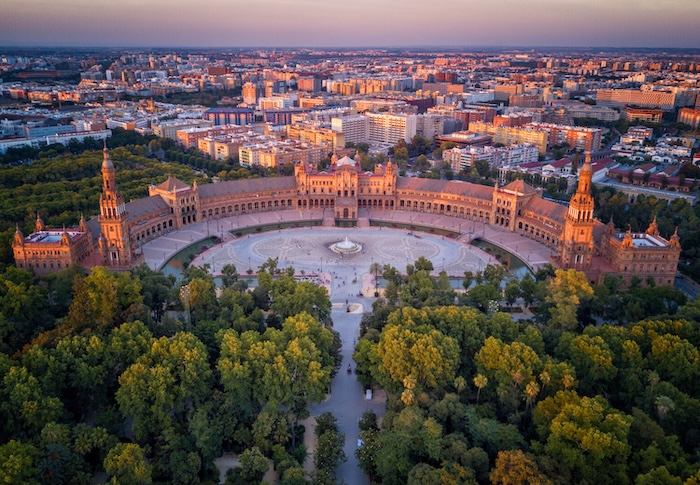
A breathtaking semicircular plaza built for the 1929 Expo, featuring a canal with ornamental bridges and 48 tiled alcoves representing each Spanish province -- one of the most spectacular architectural ensembles in the world.
Plaza de toros de la Maestranza (Maestranza Bullring)
Must seeAttraction/Landmark
One of the oldest and most prestigious bullrings in Spain, this elegant 18th-century arena along the Guadalquivir is considered the cathedral of bullfighting and a must-visit for its architecture alone.
Real Alcazar de Sevilla (Royal Palace of Seville)
Must seeAttraction/Landmark
A UNESCO World Heritage Site and the oldest royal palace still in use in Europe, this stunning complex of Mudéjar, Gothic, and Renaissance architecture was famously used as a filming location for Game of Thrones.
Setas de Sevilla (Metropol Parasol)
Must seeAttraction/Landmark
The world's largest wooden structure, this daringly modern mushroom-shaped landmark in the old quarter offers a rooftop walkway with panoramic views, a food market below, and Roman ruins in the basement.
Seville Cathedral & Giralda Tower
Must seeReligious
The world's largest Gothic cathedral and a UNESCO World Heritage Site, housing Columbus's tomb and crowned by the iconic Giralda -- a 12th-century Almohad minaret converted into a bell tower you can climb for stunning city views.
Acuario de Sevilla
Attraction/Landmark
Seville's modern aquarium near the Guadalquivir River showcases marine ecosystems from the river to the deep Atlantic, featuring over 400 species across 35 themed tanks.
Aire de Sevilla
Attraction/Landmark
A luxurious Arab bath experience housed in a 16th-century palace, offering thermal pools, massages, and traditional hammam rituals in the heart of the Santa Cruz quarter.
Antonio Garcia
Shopping
A traditional Sevillian shop known for handcrafted flamenco accessories, mantillas, and ornamental combs, preserving centuries-old Andalusian artisan traditions.
Archivo General de Indias (Archive of the Indies)
Attraction/Landmark
This UNESCO World Heritage Site houses the most extensive archive of documents relating to Spain's colonial empire in the Americas, stored in a stunning Renaissance building designed by Juan de Herrera.
Artesanía Textil on Vinuesa
Shopping
A charming textile workshop on Calle Vinuesa offering handwoven fabrics, embroidered shawls, and traditional Andalusian craftsmanship passed down through generations.
Bar La Goleta
Shopping
A beloved neighborhood bar in Seville's historic center serving authentic tapas and local wines in a no-frills, quintessentially Andalusian atmosphere.
Bulebar Café
Food/Drink
A trendy café and cultural hub in the Alameda de Hércules district, popular for its relaxed terrace, craft cocktails, and live music events that draw Seville's creative crowd.
Calle Sierpes (Sierpes Street)
Attraction/Landmark
Seville's most famous pedestrian shopping street, lined with elegant storefronts, pastry shops, and flamenco boutiques, has been the city's social promenade since the 16th century.
Casa de la Memoria (Flamenco Cultural Center)
Attraction/Landmark
An intimate flamenco venue set in an 18th-century courtyard palace, offering nightly performances that celebrate the raw, authentic roots of this passionate Andalusian art form.
Casco Antiguo
Attraction/Landmark
Seville's historic old town is a labyrinth of narrow streets, hidden plazas, and whitewashed buildings where Moorish, Jewish, and Christian heritage intertwine across centuries of history.
Castañuelas Zadi
Shopping
A specialist shop dedicated to handcrafted castanets and flamenco percussion instruments, where artisans keep alive the traditional craft of making these iconic Spanish musical accessories.
Centro Andaluz de Arte Contemporáneo
Museum/Gallery
Housed in the historic Cartuja monastery on the island of the same name, this contemporary art center showcases cutting-edge Spanish and international works within centuries-old cloisters and chapels.
Ceramicá Santa Ana
Shopping
The oldest ceramic workshop in Triana, operating since 1870, producing the hand-painted azulejo tiles and pottery that have made this riverside neighborhood famous worldwide.
Confitería La Campana
Shopping
Seville's most iconic pastry shop since 1885, famous for its exquisite tocino de cielo, cortadillos, and elaborate Easter confections, all served in a beautifully preserved Belle Epoque interior.
Convento San Leandro
Shopping
A cloistered convent famous for its heavenly yemas de San Leandro -- candied egg-yolk sweets sold through a revolving wooden turnstile by nuns who remain unseen behind the walls.
Convento de la Encarnación (Convent of the Incarnation)
Religious
A serene 16th-century convent in the cathedral quarter, known for its beautiful Baroque altarpiece and the cloistered nuns who still sell handmade pastries and preserves.
Droguería del Arenal
Shopping
A wonderfully old-fashioned general store in the Arenal district, stocked with traditional soaps, spices, herbs, and household essentials that feel like stepping back in time.
Ferretería Puerta Carmona
Shopping
A historic hardware store near the old Carmona Gate, preserving the charm of a traditional Sevillian ironmonger with wrought-iron goods, tools, and local craftsmanship.
Iglesia de San Luis de los Franceses
Religious
A spectacular Baroque jewel built by the Jesuits in the 18th century, featuring a breathtaking frescoed dome, polychrome altarpieces, and one of the finest Baroque interiors in all of Spain.
Iglesia de Santa Cruz (Church of the Holy Cross)
Religious
Standing on the site of a former synagogue in the heart of the Jewish quarter, this church gave the beloved Barrio de Santa Cruz its name and houses notable works by 17th-century Sevillian painters.
Iglesia de la Magdalena
Religious
A grand Baroque church built in the late 17th century by Leonardo de Figueroa, renowned for its stunning frescoed vaults, elaborate chapels, and its role as a starting point for Semana Santa processions.
Isla Mágica
Attraction/Landmark
A theme park built on the site of Expo '92, taking visitors on a journey through the Age of Discovery with rides, water attractions, and shows themed around 16th-century exploration.
Juncia y Romero
Shopping
A curated artisan boutique specializing in natural cosmetics, handmade soaps, and aromatic products crafted from traditional Andalusian botanical ingredients.
La Carbonería Tavern
Food/Drink
A legendary bohemian tavern in a former coal yard, famous for its free nightly flamenco shows, cheap drinks, and an eclectic atmosphere that has drawn artists and travelers for decades.
Los Gallos Tablao Flamenc
Food/Drink
One of Seville's oldest and most prestigious flamenco tablaos, operating since 1966 in a converted mansion on Plaza de Santa Cruz, showcasing top-tier dancers, singers, and guitarists nightly.
Malandar
Nightlife & Bars
A vibrant live music venue and cultural space in the Alameda de Hércules area, hosting concerts ranging from indie and electronic to flamenco fusion and world music.
Men to Men
Nightlife & Bars
A popular LGBTQ+ nightclub in the Alameda district, known for its energetic dance floor, themed party nights, and welcoming atmosphere in Seville's most vibrant nightlife area.
Mercado de Triana
Shopping
A lively food market built over the ruins of the Castle of San Jorge, the former seat of the Spanish Inquisition, now offering fresh produce, tapas stalls, and a small archaeological museum beneath.
Museo Taurino de la Real Maestranza de Caballería
Museum/Gallery
Located within the Maestranza bullring, this museum chronicles the history and culture of bullfighting in Seville through paintings, costumes, posters, and memorabilia spanning several centuries.
Palacio Arzobispal (Archbishop's Palace)
Attraction/Landmark
An imposing Baroque palace facing the cathedral, serving as the Archbishop's residence since the 13th century and housing an important collection of religious art including works by Murillo and Zurbarán.
Palacio de Lebrija
Attraction/Landmark
A 16th-century noble residence renowned for its extraordinary collection of Roman mosaics from nearby Italica, considered to have the best-preserved mosaic floors of any private home in Europe.
Palacio de los Marqueses de La Algaba
Attraction/Landmark
A beautifully restored 15th-century Mudéjar palace in the Feria district, now housing the Centro del Mudéjar museum that celebrates Seville's unique blend of Islamic and Christian architectural traditions.
Plaza Nueva (The New Square)
Attraction/Landmark
Seville's main civic square, home to the City Hall's ornate Plateresque facade, surrounded by palm-lined terraces where locals and visitors gather under the Andalusian sun.
Plaza de America
Attraction/Landmark
A picturesque square at the southern end of María Luisa Park, flanked by three ornate pavilions from the 1929 Exposition -- now housing the Archaeological and Folk Arts museums -- and famous for its friendly resident pigeons.
Plaza del Salvador
Attraction/Landmark
A lively gathering square dominated by the monumental Church of the Divine Savior, where locals fill the outdoor terraces of surrounding bars for afternoon drinks and socializing.
Plaza del Triunfo (Triumph Square)
Attraction/Landmark
A grand square surrounded by three UNESCO World Heritage Sites -- the Cathedral, the Alcazar, and the Archive of the Indies -- with a monument commemorating Seville's survival of the 1755 Lisbon earthquake.
Poster Felix
Shopping
A quirky vintage shop specializing in original posters, old advertisements, and retro prints from Spain's cultural history, offering unique souvenirs and collectible artwork.
Sala Fun Club
Nightlife & Bars
A legendary indie and alternative music venue in the Alameda neighborhood, hosting live concerts and DJ sets that have been at the heart of Seville's underground music scene for over two decades.
San Jose Chapel
Religious
A tiny, jaw-dropping Baroque chapel often called Seville's 'Sistine Chapel,' its interior entirely covered in dazzling gold leaf, polychrome sculptures, and ornate carved wood from the 18th century.
Santa Maria de las Cuevas
Religious
A historic Carthusian monastery on Cartuja Island where Christopher Columbus was once interred, later repurposed as a ceramics factory and now part of the contemporary art center complex.
Santa Maria la Blanca Church
Religious
Originally a synagogue and later a mosque, this church in the Santa Cruz quarter retains traces of all three faiths and features magnificent Baroque plasterwork and paintings by Murillo.
Supermercados el Corte Inglés
Shopping
The gourmet food hall of Spain's iconic department store chain, offering high-quality local products, Iberian ham, Andalusian olive oils, wines, and ready-made tapas in the heart of the shopping district.
Tablao Flamenco El Arenal
Nightlife & Bars
A renowned flamenco tablao in the Arenal district, offering world-class performances in an intimate setting where the raw emotion of cante, baile, and guitar fills the room nightly.
Torre del Oro (Gold Tower)
Attraction/Landmark
A 13th-century Almohad watchtower on the banks of the Guadalquivir, once part of the city's defensive walls and now housing a small naval museum with panoramic river views from its rooftop.
Universidad de Sevilla (University of Seville)
Attraction/Landmark
Housed in the former Royal Tobacco Factory -- the largest industrial building in 18th-century Spain and the setting of Bizet's Carmen -- this grand Baroque complex is now the main campus of one of Spain's oldest universities.