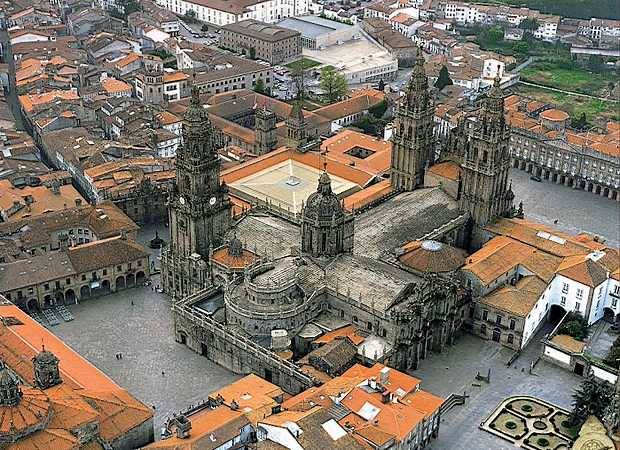
Santiago de Compostela
27 points of interest
Hostal dos Reis Catolicos (Hospital Real de Santiago de Compostela)
Must seeAttraction/Landmark
Built in 1499 by the Catholic Monarchs as a royal hospital for pilgrims, this magnificent Plateresque building on the Plaza del Obradoiro is now a luxury Parador hotel — considered one of the oldest hotels in the world.
Monasterio de San Martin Pinario (Monastery of San Martino Pinario)
Must seeReligious
The second largest monastery in Spain after El Escorial, this imposing Baroque complex was founded in the 10th century by Benedictine monks and features an extraordinary altarpiece and an ornate Plateresque facade.
Plaza del Obradoiro (Square of the Workshop)
Must seeAttraction/Landmark
The monumental heart of Santiago and the emotional endpoint of the Camino de Santiago pilgrimage. This grand square is surrounded by four architectural masterpieces spanning Romanesque, Baroque, Plateresque, and Neoclassical styles.
Santiago de Compostela Cathedral
Must seeReligious
The magnificent endpoint of the Camino de Santiago pilgrimage, this Cathedral was built over the tomb of the Apostle Saint James beginning in 1075. Its Baroque facade conceals a Romanesque interior of extraordinary beauty and spiritual power.
Botafumeiro
Religious
The Botafumeiro is a famous giant incense burner inside Santiago's Cathedral, weighing 53 kg and swung dramatically across the transept during special masses — a tradition dating back to the Middle Ages.
Casa do Cabildo (Town Hall)
Attraction/Landmark
This stunning 18th-century Baroque facade on the Plaza de las Platerías was built purely for decorative purposes — it is only a few meters deep, making it one of the thinnest buildings in Spain.
Cervantes Square (Plaza de Cervantes)
Attraction/Landmark
Once the main marketplace and civic heart of medieval Santiago, this lively square is named after Miguel de Cervantes and features a monument to him at its center, surrounded by charming cafés and historic buildings.
Colegio de Fonseca (Fonseca College)
Attraction/Landmark
Founded in 1522 by Archbishop Alonso de Fonseca, this Renaissance college was the original seat of the University of Santiago de Compostela and features a beautiful cloister now used for exhibitions and cultural events.
Collegiate Church of Santa Maria del Sar
Religious
This remarkable 12th-century Romanesque church is famous for its dramatically leaning interior columns, buttressed from the outside to prevent collapse — a fascinating architectural curiosity just outside the old town.
Convent of San Francisco
Religious
Legend says Saint Francis of Assisi himself founded this convent in 1214 during his pilgrimage to Santiago. The current Baroque building houses a museum of sacred art and a hotel within its historic walls.
Fuente de los Caballos (Fountain of the Horses)
Attraction/Landmark
This elegant 19th-century fountain in the Plaza de las Platerías features four horse sculptures spouting water, and has become one of the most photographed landmarks in Santiago's historic center.
Las Dos Marias (The Two Marys)
Attraction/Landmark
These bronze statues in Alameda Park honor Maruxa and Coralia, two eccentric sisters who became beloved local icons in the 20th century for their flamboyant outfits and daily strolls through Santiago's streets.
Mercado de Abastos (Santiago Food Market)
Shopping
Santiago's main food market, operating since 1873, is the second most visited spot in the city after the Cathedral. Here locals and visitors find fresh Galician seafood, cheeses, vegetables, and the region's best produce.
Monastery of San Pelayo de Antealtares
Religious
One of the oldest monasteries in Santiago, founded in the 9th century to guard the newly discovered tomb of Saint James. Today it is home to an enclosed order of Benedictine nuns who sell traditional almond cakes.
Museo del Pueblo Gallego (Museum of the Galician People)
Museum/Gallery
Housed in the former Convent of Santo Domingo de Bonaval, this museum showcases Galician culture through traditional crafts, clothing, music, and maritime life. Its triple helicoidal staircase by Domingo de Andrade is an architectural marvel.
Museum of Pilgrimages and Santiago
Museum/Gallery
This museum tells the story of the Camino de Santiago pilgrimage through the centuries, with exhibits on the discovery of Saint James's tomb, medieval pilgrim life, and the cultural impact of the Way across Europe.
Palacio de Gelmirez (Gelmirez Palace)
Attraction/Landmark
Built in the 12th century for Archbishop Diego Gelmírez, this is one of the finest examples of Romanesque civil architecture in Spain. Its grand banquet hall features remarkable stone carvings depicting a medieval feast.
Palacio de Rajoy (Rajoy Palace)
Attraction/Landmark
This grand Neoclassical palace facing the Cathedral across the Plaza del Obradoiro was commissioned by Archbishop Bartolomé Rajoy in the 18th century. It now serves as Santiago's City Hall and the seat of the Galician regional government.
Parque La Alameda (Alameda Park)
Attraction/Landmark
Santiago's beloved green oasis features centuries-old oak trees, ornamental gardens, and stunning panoramic views of the Cathedral's towers. It has been the city's favorite promenade since the 19th century.
Plaza da Inmaculada (Immaculada Square)
Attraction/Landmark
Also known as the Azabachería, this square on the Cathedral's north side was the traditional entrance for pilgrims arriving via the French Way. It is framed by the massive facade of the San Martín Pinario monastery.
Plaza de la Quintana (Quintana Square)
Attraction/Landmark
Divided into the Quintana of the Dead (lower) and the Quintana of the Living (upper), this atmospheric square behind the Cathedral features the famous Holy Door, opened only during Holy Years when Saint James's feast falls on a Sunday.
Plaza de las Platerias (Silverware Square)
Attraction/Landmark
Named after the silversmiths who once had their workshops here, this square on the Cathedral's south side features the only original Romanesque facade of the Cathedral, adorned with masterful 12th-century stone sculptures.
Portico de la Gloria (Portico of Glory)
Attraction/Landmark
Carved by Master Mateo in 1188, this breathtaking Romanesque sculptural ensemble inside the Cathedral is considered one of the greatest masterpieces of medieval European art, depicting over 200 biblical figures in vivid detail.
Rua do Vilar (Vilar Street)
Attraction/Landmark
One of Santiago's most charming medieval streets, lined with granite arcades that shelter pedestrians from the famous Galician rain. Its historic stone buildings house traditional shops, bookstores, and cozy taverns.
Rúa Nova (New Street)
Attraction/Landmark
Despite its name, Rúa Nova dates back to the 12th century and runs parallel to Rúa do Vilar. This vibrant pedestrian street is known for its arcaded walkways, lively bars, and some of Santiago's best restaurants.
Santo Domingo de Bonaval Park
Parks & Gardens
This hillside park, redesigned by Galician artist Alvaro Siza Vieira, occupies the former grounds of the Santo Domingo de Bonaval convent. It offers peaceful gardens, an old cemetery, and sweeping views over Santiago's rooftops.
Troia House Museum (Museo Casa da Troia)
Museum/Gallery
This small museum recreates the atmosphere of a 19th-century student boarding house immortalized in the novel 'La Casa de la Troya' by Alejandro Pérez Lugín, offering a charming glimpse into Santiago's vibrant university life of the past.