Pamplona
25 points of interest
Ayuntamiento de Pamplona (Pamplona City Hall)
Must seeAttraction/Landmark
This baroque 18th-century city hall is where the famous 'chupinazo' rocket is launched each July 6th to kick off the San Fermin festival, drawing thousands to its ornate balcony.
Catedral de Pamplona (Pamplona Cathedral)
Must seeAttraction/Landmark
Behind its austere neoclassical facade lies one of Spain's finest Gothic cathedrals, boasting the second-largest cloister in Europe and the elegant tomb of King Charles III of Navarre.
Ciudadela de Pamplona (Citadel of Pamplona)
Must seeAttraction/Landmark
This imposing 16th-century star-shaped fortress, designed by Italian engineer Giacomo Palearo, is now a sprawling public park and cultural venue in the heart of Pamplona.
Monumento al Encierro (Running of the Bulls Monument)
Must seeMonument
This dramatic bronze sculpture captures the chaos and adrenaline of the San Fermin bull run, depicting runners and bulls mid-stride in one of the city's most photographed landmarks.
Parque de La Taconera (La Taconera Park)
Must seeParks & Gardens
Pamplona's oldest and most beautiful park features French-style gardens, a charming moat with deer and peacocks, and centuries-old trees within the old city walls.
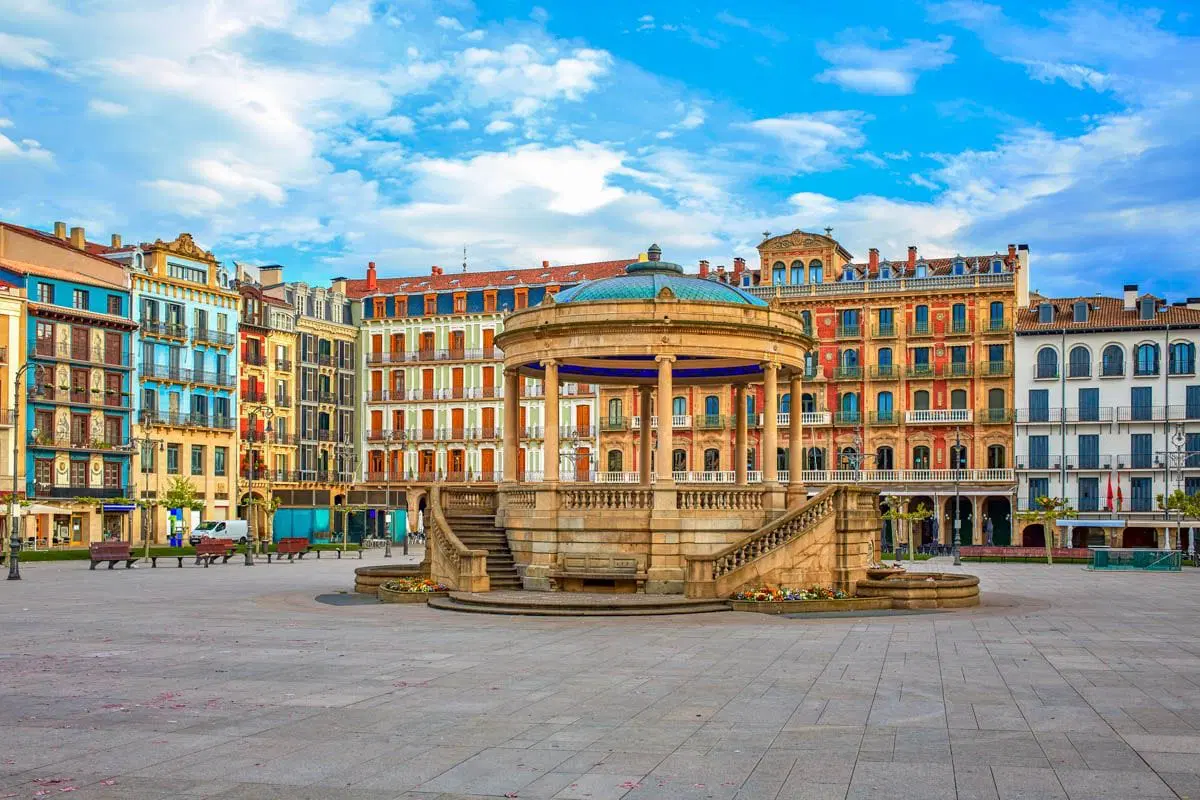
Plaza del Castillo (Castle Square)
Must seeAttraction/Landmark
The vibrant heart of Pamplona since medieval times, this elegant arcaded square is surrounded by cafes -- including the legendary Cafe Iruna, once frequented by Ernest Hemingway.
Archivo Real y General de Navarra (Royal and General Archive of Navarre)
Attraction/Landmark
Housed in a beautifully restored Romanesque palace, the Royal and General Archive of Navarre preserves centuries of documents tracing the history of the Kingdom of Navarre.
Basilica de San Ignacio de Loyola (Basilica of Saint Ignatius of Loyola)
Religious
Built on the very spot where a cannonball wounded the young soldier Ignatius of Loyola in 1521, this basilica marks the pivotal moment that led him to found the Jesuit order.
Calle de Estafeta (Estafeta Street)
Attraction/Landmark
The most famous stretch of the San Fermin bull run, this lively narrow street is lined with traditional bars and pintxo spots that buzz with energy year-round.
Calle de Zapateria (Shoemaker Street)
Attraction/Landmark
One of Pamplona's oldest medieval streets, Calle Zapateria was once the heart of the shoemaking guild and today offers a charming walk through the city's storied Casco Viejo.
Iglesia de San Lorenzo (Church of San Lorenzo)
Religious
Home to the Chapel of San Fermin, this church shelters the revered statue of Pamplona's patron saint that is paraded through the streets every July during the famous festival.
Iglesia de San Nicolas (Church of San Nicolas)
Religious
This striking 12th-century fortified church once served as both a place of worship and a defensive stronghold for the medieval borough of San Nicolas.
Iglesia de San Saturnino (Church of San Saturnino)
Religious
Also known as San Cernin, this 13th-century Gothic church with its iconic bell tower marks the spot where, according to tradition, Pamplona's first Christians were baptized.
Mercado del Ensanche (Ensanche Market)
Shopping
A vibrant covered market where locals shop for fresh Navarrese produce, artisan cheeses, and seasonal specialties -- the perfect place to taste the region's culinary heritage.
Monumento a los Caidos (Monument to the Fallen)
Attraction/Landmark
This solemn monument and adjoining church, built in the 1940s at the southern edge of the city, commemorates those who fell during the Spanish Civil War and remains a thought-provoking landmark.
Museo Universidad de Navarra (University of Navarra Museum)
Museum/Gallery
Designed by star architect Rafael Moneo, this striking contemporary art museum houses an impressive collection spanning photography, painting, and sculpture in a bold modernist building.
Museo de Navarra (Navarre Museum)
Museum/Gallery
Set in a former medieval hospital, the Navarre Museum showcases the region's rich heritage from prehistoric times to the present, including stunning Roman mosaics and a rare Goya portrait.
Palacio de Navarra (Navarre Palace)
Attraction/Landmark
This elegant neoclassical palace serves as the seat of the Government of Navarre, featuring a lavishly decorated throne room and a majestic garden with a giant sequoia tree.
Parque de La Media Luna (Half Moon Park)
Parks & Gardens
Named for its crescent shape, this elegant park offers sweeping views of the Arga River valley and the Pyrenees foothills, making it a favorite sunset spot for locals.
Parque de Yamaguchi (Yamaguchi Park)
Parks & Gardens
Created to celebrate the twinning of Pamplona with Yamaguchi, Japan, this tranquil park blends Japanese garden design with Navarrese landscaping, complete with a small lake and the Pamplona Planetarium.
Paseo de Sarasate (Sarasate Promenade)
Attraction/Landmark
Named after the legendary Pamplona-born violinist Pablo Sarasate, this tree-lined boulevard connects the old town to the Ensanche and features the iconic Monument to the Fueros of Navarre.
Planetario de Pamplona (Pamplona Planetarium)
Attraction/Landmark
Located within Yamaguchi Park, this modern planetarium offers immersive shows about the cosmos and is one of the most advanced astronomical centers in northern Spain.
Plaza de Toros de Pamplona (Pamplona Bullring)
Attraction/Landmark
The final destination of the famous encierro, this 19,500-seat bullring is where the bulls arrive after their frantic run through the old town streets each morning during San Fermin.
Portal de Francia (France Gate)
Attraction/Landmark
One of the few surviving medieval gates in Pamplona's fortified walls, this arched portal has welcomed Camino de Santiago pilgrims arriving from France for centuries.
Puente de la Magdalena (Magdalena Bridge)
Attraction/Landmark
This graceful Romanesque bridge over the Arga River, adorned with a pilgrim's cross, has been a key crossing point on the Camino de Santiago since the 12th century.