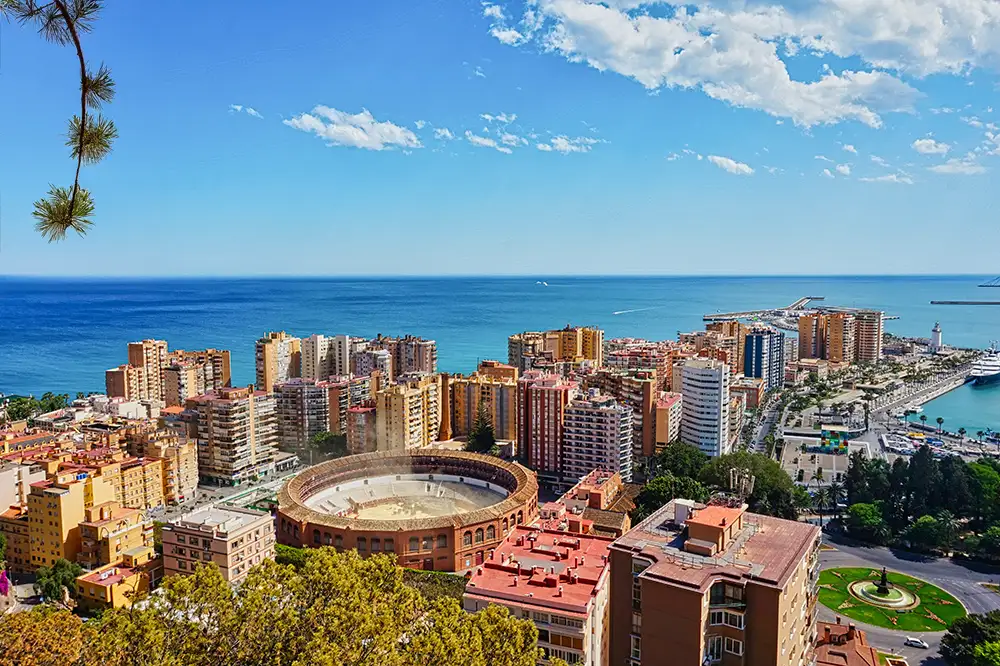
Málaga
78 points of interest
Alcazaba of Malaga (Malaga Fortress)
Must seeAttraction/Landmark
This 11th-century Moorish fortress-palace is one of the best-preserved alcazabas in Spain, offering stunning views over the city and port from its terraced gardens and fortified walls.
Calle Larios (Larios Street)
Must seeAttraction/Landmark
Malaga's elegant main shopping street, built in 1891, is a pedestrianized boulevard lined with beautiful 19th-century facades and serves as the heart of the city's social life and festivals.
Castillo de Gibralfaro (Gibralfaro Castle)
Must seeAttraction/Landmark
Perched atop Mount Gibralfaro, this 14th-century Nasrid castle was built to protect the Alcazaba below and offers some of the most breathtaking panoramic views of Malaga, its coastline, and the mountains beyond.
Catedral de Málaga (Malaga Cathedral)
Must seeReligious
Known affectionately as 'La Manquita' (the one-armed lady) because one of its towers was never completed, this Renaissance cathedral took over 200 years to build and features a magnificent interior blending Gothic, Renaissance, and Baroque styles.
Historic Botanical Garden of The Conception
Must seeParks & Gardens
One of the finest tropical and subtropical gardens in Europe, this 19th-century estate features over 2,000 plant species from five continents, romantic waterfalls, and a stunning collection of palm trees.
Mercado de Atarazanas (Shipyards Market)
Must seeShopping
Built on the site of a 14th-century Nasrid shipyard, this vibrant market features a magnificent Moorish gateway and a stunning stained-glass window, while vendors offer the freshest seafood, produce, and local delicacies.
Museo Automovilistico y de la Moda (Automobile and Fashion Museum)
Must seeMuseum/Gallery
This unique museum in the former Royal Tobacco Factory pairs vintage automobiles with haute couture fashion, displaying nearly 100 classic cars alongside designer pieces from the same eras in a stunning multimedia experience.
Museo Carmen Thyssen Malaga (Carmen Thyssen Museum)
Must seeMuseum/Gallery
Housed in a beautifully restored 16th-century palace, this museum showcases Baroness Carmen Thyssen's collection of 19th-century Spanish and Andalusian painting, with masterpieces depicting local landscapes, festivals, and daily life.
Museo Picasso Málaga (Picasso Museum)
Must seeMuseum/Gallery
Housed in the 16th-century Buenavista Palace, this world-class museum displays over 200 works by Pablo Picasso donated by his family, spanning his entire career from early academic studies to late masterpieces.
Parque de Malaga (Park of Malaga)
Must seeParks & Gardens
One of Europe's largest urban tropical parks, this lush 19th-century promenade stretches along the port with exotic trees from five continents, ornamental fountains, sculptures, and vibrant flower beds.
Plaza de la Merced (Merced Square)
Must seeAttraction/Landmark
One of Malaga's most vibrant squares, this is where young Picasso played as a child and where the Torrijos obelisk stands. Today it buzzes with cafe terraces, street performers, and lively nightlife.
Puerto de Malaga (Port of Málaga)
Must seeAttraction/Landmark
One of the oldest continuously operating ports in the Mediterranean, Malaga's port has been beautifully modernized with the Muelle Uno promenade, offering shops, restaurants, and stunning views of the Alcazaba and Gibralfaro.
Auditorio Eduardo Ocón (Eduardo Ocon Auditorium)
Attraction/Landmark
Named after the celebrated Malaga-born composer, this open-air auditorium in the Paseo del Parque hosts concerts and cultural events against a backdrop of tropical gardens.
Ayuntamiento de Málaga (Malaga City Hall)
Attraction/Landmark
Malaga's City Hall is an elegant early 20th-century Neo-Baroque building located between the Paseo del Parque and the Alcazaba, blending Baroque and Art Nouveau influences.
Biznaguero
Attraction/Landmark
This charming bronze sculpture pays tribute to the traditional jasmine flower sellers of Malaga, who crafted and sold the iconic biznaga -- a symbol of the city made from woven jasmine blossoms.
Bodega Bar - El Pimpi
Food/Drink
Malaga's most beloved bar and bodega, El Pimpi has been a gathering place for locals and celebrities since 1971, famous for its sweet Malaga wine served from traditional barrels.
Casas de Félix Sáenz (Félix Sáenz Houses)
Attraction/Landmark
These striking late 19th-century residential buildings near the port showcase the ornate architectural style favored by Malaga's wealthy merchant class during the city's industrial golden age.
Cementerio Inglés (English Cemetery)
Attraction/Landmark
Founded in 1831 as the first Protestant cemetery in Spain, this tranquil garden cemetery near the bullring tells the stories of the British community that shaped Malaga's 19th-century commercial life.
Cenachero
Attraction/Landmark
This beloved bronze statue honors the cenacheros, traditional fishermen who carried fresh fish through the streets of Malaga in wicker baskets balanced on their shoulders -- a vanished trade that symbolizes the city's maritime heritage.
Centre Pompidou Malaga
Museum/Gallery
Housed beneath a striking multicolored glass cube at the port, this is the first branch of the famous Parisian museum outside France, showcasing rotating selections of modern and contemporary art.
Centro Cultural La Malagueta (La Malagueta Cultural Center)
Attraction/Landmark
Located in the historic La Malagueta district near the port, this cultural center hosts exhibitions, workshops, and community events in a neighborhood known for its bullring and seaside promenade.
Centro Cultural Provincial (Provincial Cultural Center)
Attraction/Landmark
Managed by the provincial government, this cultural center in northern Malaga hosts art exhibitions, literary events, and performing arts, serving as a hub for Andalusian culture.
Centro de Arte Contemporáneo de Málaga (Malaga Contemporary Art Center)
Museum/Gallery
Known as the CAC Malaga, this free-admission contemporary art center occupies a former wholesale market by the Guadalmedina river and showcases cutting-edge works by both established and emerging international artists.
Coleccion del Museo Ruso (Russian Museum Collection)
Museum/Gallery
Housed in the former Royal Tobacco Factory, this museum displays rotating exhibitions from St. Petersburg's State Russian Museum, making it the only permanent venue for Russian art in Southern Europe.
Convento de San Agustín de Málaga (San Agustín Convent)
Religious
This 16th-century Augustinian convent in the heart of the old town was later converted and today houses part of the University of Malaga, preserving its historic Renaissance cloister.
Estatua de Pablo Ruiz Picasso (Picasso Sculpture)
Attraction/Landmark
Sitting casually on a marble bench in Plaza de la Merced, this life-size bronze statue of Malaga's most famous son invites visitors to sit beside Picasso and snap a photo in the square where he played as a child.
Estatua del Marqués de Larios (Statue of the Marquis of Larios)
Attraction/Landmark
This grand bronze monument at the southern end of Calle Larios honors Manuel Domingo Larios, the 2nd Marquis of Larios, whose industrial investments transformed 19th-century Malaga into a thriving economic center.
Fuente de las Tres Gracias (Fountain of the Three Graces)
Attraction/Landmark
This elegant 19th-century marble fountain in the Plaza del General Torrijos depicts three female figures representing grace, beauty, and charm, and serves as one of Malaga's most photographed landmarks.
Galeria Cartel Fine Art
Museum/Gallery
This contemporary fine art gallery in the historic center showcases works by emerging and established artists, contributing to Malaga's growing reputation as a European cultural capital.
Headquarters of the Bank of Spain in Malaga
Attraction/Landmark
This imposing early 20th-century Neoclassical building on the Paseo del Parque served as the regional seat of Spain's central bank and stands as a testament to Malaga's historical importance as a financial hub.
Iglesia San Pedro (Church of San Pedro)
Religious
This 17th-century Baroque church in the Perchel neighborhood features a striking bell tower and richly decorated altarpieces, standing as one of the most important parish churches in Malaga's historic quarters.
Iglesia de Nuestra Señora de Fátima (Church of Our Lady of Fatima)
Religious
This mid-20th-century parish church dedicated to Our Lady of Fatima serves the northern residential neighborhoods of Malaga and reflects the city's post-war religious architecture.
Iglesia de San Felipe Neri (Church of San Felipe Neri)
Religious
This 18th-century Baroque church is renowned for its beautiful interior with elaborate gilded altarpieces and its role in the liberal movement -- it was here that Malaga's citizens proclaimed the 1812 Constitution.
Iglesia de San Juan Bautista (Saint John Baptist Church)
Religious
One of the four original parish churches founded after the Christian reconquest of Malaga in 1487, this church blends Gothic and Mudejar elements and houses notable Baroque altarpieces and sculptures.
Iglesia de San Lázaro (Church of Saint Lazarus)
Religious
Dating back to the 15th century, this modest church in the Capuchinos neighborhood is one of Malaga's oldest, originally built outside the city walls to serve a hospital for lepers.
Iglesia de San Pablo (Saint Paul’s Church)
Religious
This 19th-century Neo-Gothic church in the Trinidad neighborhood is famous for its soaring tower and for being the home parish of some of Malaga’s most important Holy Week brotherhoods.
Iglesia de Santa María del Sagrario (Church of Santa Maria del Sagrario)
Religious
Adjacent to the Cathedral, this church preserves a magnificent late-Gothic Isabeline portal from the 16th century and houses a richly ornamented Baroque interior, making it a hidden gem of Malaga's old town.
Iglesia de Santiago Apóstol (Church of Santiago Apostol)
Religious
One of Malaga's oldest churches, founded in 1490, this is where Pablo Picasso was baptized in 1881. Its stunning Mudejar tower and Gothic-Baroque interior make it architecturally remarkable.
Iglesia de los Mártires (Martyrs Church)
Religious
Founded in 1491 and dedicated to the martyrs San Ciriaco and Santa Paula, patron saints of Malaga, this church features a striking Mudejar tower and a lavishly decorated Rococo interior.
Iglesia del Sagrado Corazón (Sacred Heart Church)
Religious
This Neo-Gothic church built in the early 20th century features elegant pointed arches and stained glass windows, standing as one of the finest examples of Gothic Revival architecture in Malaga.
Iglesia del Santo Cristo de la Salud (Church of Santo Cristo de la Salud)
Religious
Originally part of a 16th-century Jesuit college, this church is celebrated for its extraordinary octagonal sacristy and houses the revered image of the Cristo de la Salud, central to Malaga's Holy Week processions.
Jardines de Pedro Luis Alonso (Gardens of Pedro Luis Alonso)
Attraction/Landmark
These beautifully manicured gardens between City Hall and the Alcazaba feature geometric hedges, rose bushes, orange trees, and fountains in a serene Neo-Latin style that provides a peaceful retreat from the city.
La Farola
Attraction/Landmark
One of only two lighthouses in Spain with a feminine name, La Farola has guided ships into Malaga's port since 1817 and is one of the city's most recognizable symbols along the seafront.
Mirador del Gibralfaro (Gibralfaro Viewpoint)
Attraction/Landmark
This iconic viewpoint near Gibralfaro Castle offers a sweeping 360-degree panorama of Malaga, from the bullring and port below to the Mediterranean horizon and the mountains of the interior.
Monumento a Salvador Rueda (Monument to Salvador Rueda)
Attraction/Landmark
This monument in the Paseo del Parque honors Salvador Rueda, a Malaga-born poet considered a precursor of Spanish modernism, whose vivid verses celebrated Andalusian landscapes and daily life.
Monumento a Torrijos (Monument to Torrijos)
Attraction/Landmark
This obelisk in Plaza de la Merced commemorates General José María Torrijos and his 48 companions, liberal heroes who were executed on the beach of San Andrés in 1831 for fighting against absolutism.
Monumento al Comandante Benitez (Monument to Commander Benitez)
Attraction/Landmark
This monument near the Cathedral honors Commander Benítez, a local military figure, and stands as one of the many historical markers that dot Malaga's old town, reflecting the city's layered past.
Monumento al Fiestero (Partygoer Monument)
Attraction/Landmark
This playful sculpture captures the festive spirit of Malaga, depicting a reveler in full celebration -- a tribute to the city's legendary love of fiestas, fairs, and joyful street life.
Museo Interactivo de la Ciencia y Tecnología Principia (Principia Science Museum)
Museum/Gallery
This hands-on science museum makes physics, chemistry, and astronomy accessible through interactive experiments and live demonstrations, and features a planetarium and a rooftop astronomical observatory.
Museo Interactivo de la Música (Interactive Museum of Music)
Museum/Gallery
Located in a historic palace, this museum invites visitors to touch and play instruments from around the world, tracing the evolution of music from ancient civilizations to the digital age.
Museo Tesoro de la Cofradía de La Expiración (Museum of the Treasures of the Brotherhood of Expiry)
Museum/Gallery
This museum displays the sacred treasures and processional art of one of Malaga's most important Holy Week brotherhoods, including ornate thrones, vestments, and centuries-old religious silverwork.
Museo de Arte Flamenco Juan Breva (Juan Breva Museum of Flamenco Art)
Museum/Gallery
Named after the legendary Malaga-born flamenco singer, this intimate museum celebrates Andalusia's flamenco heritage through historic posters, costumes, guitars, and rare recordings spanning two centuries.
Museo de Artes y Costumbres Populares (Museum of Popular Arts and Customs)
Museum/Gallery
Set in a charming 17th-century inn by the Guadalmedina river, this museum recreates traditional Malaga life through period rooms, folk costumes, agricultural tools, and craft workshops from centuries past.
Museo de Málaga (Malaga Museum)
Museum/Gallery
Andalusia's largest museum occupies the magnificent Palacio de la Aduana, combining fine arts and archaeology under one roof with collections spanning from Phoenician artifacts to 20th-century Spanish paintings.
Museo de la Imaginacion (Museum of the Imagination)
Museum/Gallery
This family-friendly interactive museum plays with perception through optical illusions, holograms, and immersive rooms that challenge visitors' senses and make for unforgettable photo opportunities.
Museo del Patrimonio Municipal (Municipal Heritage Museum)
Museum/Gallery
Known as MUPAM, this free museum near the Alcazaba houses the city's own art and heritage collection, featuring paintings, sculptures, and historical artifacts that tell the story of Malaga through the centuries.
Museo del Vidrio y Cristal (Museum of Glass and Crystal)
Museum/Gallery
Set in a restored 18th-century mansion, this privately curated museum displays over 3,000 pieces of glass and crystal art spanning from ancient Egypt to the 20th century, with rooms decorated in period styles.
Museo del Vino (Wine Museum)
Museum/Gallery
This museum celebrates Malaga's centuries-old winemaking tradition, displaying historic presses, antique labels, and vintage bottles while offering tastings of the region's famous sweet Muscatel wines.
Museo-Acuario Aula del Mar (Aula del Mar Museum-Aquarium)
Museum/Gallery
This marine museum and aquarium near the port educates visitors about the Mediterranean's ecosystems and marine life, featuring live species, interactive displays, and a sea turtle rescue and rehabilitation program.
Ninfa del Cántaro (Nymph with the Pitcher)
Attraction/Landmark
This graceful fountain sculpture in the Paseo del Parque depicts a classical nymph pouring water from a pitcher, adding a touch of mythological elegance to Malaga's beloved tropical promenade.
Palacio Episcopal de Málaga (Episcopal Palace)
Attraction/Landmark
Facing the Cathedral on Plaza del Obispo, this stunning 18th-century Baroque palace with its elaborate facade served as the residence of Malaga's bishops and now hosts art exhibitions and cultural events.
Palacio de la Tinta (Ink Palace)
Attraction/Landmark
This elegant late 19th-century building near the English Cemetery earned its curious name from the vast amounts of ink used by the railway company that once had its administrative offices here.
Parroquia Divina Pastora Y Santa Teresa (Parish of the Divina Pastora and Santa Teresa)
Religious
This parish church in the northern neighborhoods of Malaga is dedicated to the Divina Pastora and Santa Teresa de Jesus, serving as a center of devotion and community life for the surrounding residential area.
Parroquia Nuestra Señora Del Carmen (Our Lady of Carmen Parish)
Religious
Located in the traditional Perchel neighborhood, this church is dedicated to the Virgen del Carmen, patroness of fishermen, and plays a central role in the neighborhood's vibrant July festivities honoring the Virgin.
Parroquia Santisima Trinidad (Holy Trinity Parish)
Religious
This Baroque parish church gives its name to the historic Trinidad neighborhood, one of Malaga's most authentic barrios, and is home to several Holy Week brotherhoods with deep local roots.
Parroquia Santo Domingo De Guzman (Parish of Santo Domingo de Guzman)
Religious
This 16th-century Dominican church features an impressive Baroque portal and a richly decorated interior with gilded altarpieces, and is home to the renowned brotherhood of the Cristo de la Buena Muerte.
Parroquia de Cristo Rey (Cristo Rey Parish)
Religious
This mid-20th-century parish church serves one of Malaga's northern residential neighborhoods and is a gathering place for the local community, reflecting the city's post-war urban expansion.
Picasso Birthplace Museum
Museum/Gallery
Located in the building where Pablo Picasso was born in 1881 on Plaza de la Merced, this museum preserves the family apartment and displays personal memorabilia, early sketches, and ceramics by the artist and his father.
Plaza de la Constitución (Constitution Square)
Attraction/Landmark
The historic heart of Malaga since Moorish times, this lively square at the top of Calle Larios has been the city's main gathering place for centuries, hosting markets, celebrations, and political proclamations.
Plaza del Obispo de Malaga (Bishop's Square)
Attraction/Landmark
Framed by the Cathedral's imposing facade and the ornate Episcopal Palace, this intimate square with its central fountain is one of Malaga's most picturesque corners and a perfect spot for a leisurely coffee.
Plaza y Acera de La Marina (Marina Square and Sidewalk)
Attraction/Landmark
This bustling waterfront square and promenade connects the historic center with the port area, featuring a grand fountain and serving as a gateway between Calle Larios and the modern Muelle Uno shopping pier.
Puntos de Vista (Points of View)
Attraction/Landmark
This contemporary public art installation near the Cathedral offers a creative perspective on Malaga's urban landscape, inviting passersby to see familiar surroundings through an artistic lens.
Rectory of the University of Malaga
Attraction/Landmark
Housed in the former Post Office building on the Paseo del Parque, this elegant early 20th-century edifice serves as the administrative headquarters of the University of Malaga and showcases refined Neoclassical architecture.
Sala Wengé
Nightlife & Bars
This intimate performance venue in the heart of old town Malaga hosts live music, comedy shows, and cultural events, providing a stage for both local talent and visiting performers in a cozy atmosphere.
Santuario de la Victoria (Sanctuary of Santa Maria de la Victoria)
Religious
This 15th-century sanctuary houses the Virgen de la Victoria, patroness of Malaga, and features a breathtaking Baroque crypt decorated with macabre skeleton motifs -- one of Spain's most unusual religious interiors.
Teatro Cervantes (Cervantes Theater)
Attraction/Landmark
Malaga's main theater since 1870, this grand venue hosts the prestigious Malaga Film Festival each March and year-round performances of opera, ballet, theater, and concerts in its beautifully restored 19th-century auditorium.
Teatro Cánovas (Canovas Theater)
Attraction/Landmark
Managed by the Andalusian regional government, this modern theater is a key venue for contemporary performing arts in Malaga, hosting drama, dance, and experimental productions throughout the season.
Teatro Romano (Roman Theatre)
Attraction/Landmark
Discovered in 1951 beneath the foundations of a cultural center, this 1st-century BC Roman theater at the foot of the Alcazaba is one of the oldest monuments in Malaga and still hosts occasional performances today.