Granada
75 points of interest
Capilla Real de Granada (Royal Chapel)
Must seeReligious
The final resting place of the Catholic Monarchs Ferdinand and Isabella who united Spain and funded Columbus's voyage, the Royal Chapel is a masterpiece of late Gothic architecture housing their elaborate marble tombs, a stunning altarpiece by Felipe Bigarny, and Isabella's personal art collection including works by Memling and Botticelli.
Carrera del Darro (Darro Street)
Must seeAttraction/Landmark
Often called the most beautiful street in Granada, the Carrera del Darro follows the course of the Darro River beneath the towering walls of the Alhambra, passing by Arab baths, Renaissance palaces, and stone bridges in a breathtaking walk that connects Plaza Nueva with the Paseo de los Tristes.
Generalife Gardens
Must seeAttraction/Landmark
The enchanting summer palace and gardens of the Nasrid sultans perched above the Alhambra, the Generalife features the legendary Patio de la Acequia with its long central water channel flanked by fountains and rose bushes, cypress-lined walkways, and terraced gardens that represent the finest surviving example of medieval Islamic garden design.
Granada Cathedral
Must seeReligious
One of the first Renaissance cathedrals in Spain, Granada Cathedral was begun in 1518 on the site of the Great Mosque and features a luminous white interior with soaring columns, a circular capilla mayor designed by Diego de Siloé, magnificent stained glass windows, and an impressive Baroque facade by Alonso Cano.
La Madrasa (The Prayer Room)
Must seeAttraction/Landmark
Founded in 1349 by Sultan Yusuf I, the Madrasa of Granada was the first university in the city and one of the few Islamic universities in Western Europe, now preserving a spectacular Nasrid prayer room with an ornate polychrome ceiling, muqarnas, and calligraphic stucco within a later Baroque exterior.
Mirador de San Nicolas (San Nicolas Lookout)
Must seeAttraction/Landmark
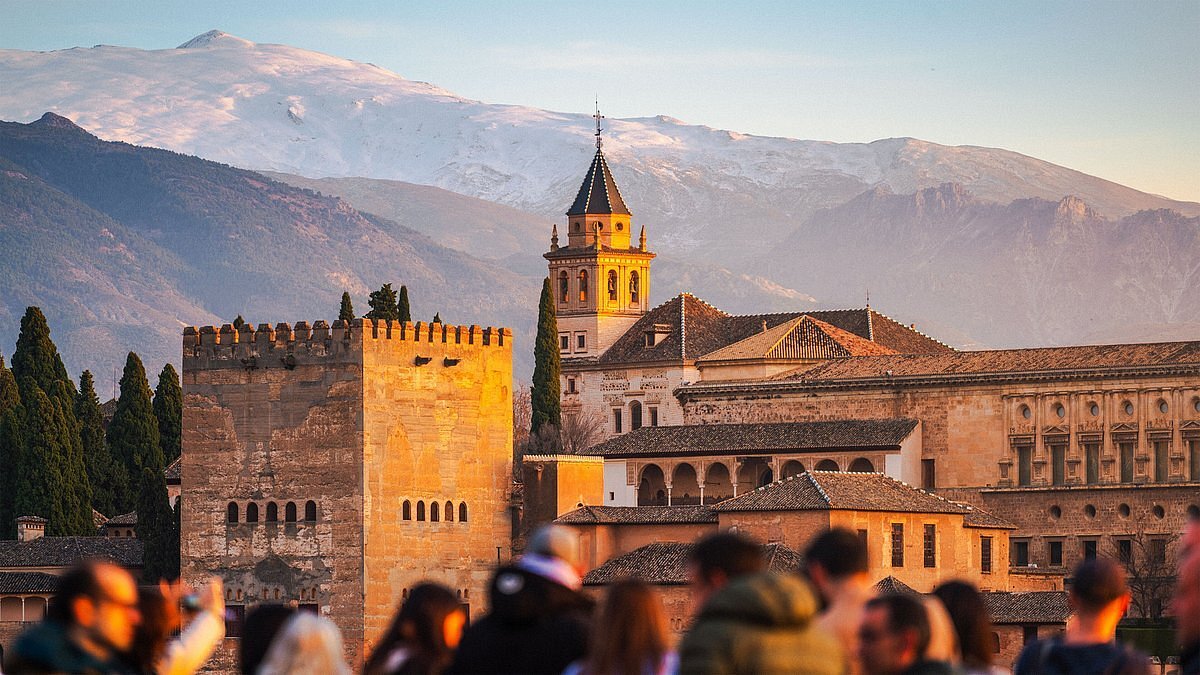
The most famous viewpoint in Granada, the Mirador de San Nicolás offers an unforgettable panorama of the Alhambra bathed in golden light against the snow-capped Sierra Nevada mountains, a scene that Bill Clinton once called the most beautiful sunset in the world, best enjoyed at dusk as the palace glows amber.
Monastery Cartuja
Must seeMuseum/Gallery
A 16th-century Carthusian monastery on the northern outskirts of Granada, the Cartuja houses one of the most exuberant Baroque sacristies in all of Spain, an explosion of polychrome marble, gilded stucco, and trompe-l'oeil frescoes that represents the pinnacle of Andalusian Baroque extravagance.
Palace of Charles V
Must seeAttraction/Landmark
A monumental Renaissance palace built within the Alhambra complex by Emperor Charles V after the Christian conquest, featuring a unique circular inner courtyard with two tiers of Doric and Ionic colonnades — a bold statement of Christian imperial power set deliberately within the heart of the Nasrid palace grounds.
Paseo de los Tristes (The Promenade of the Sad)
Must seeAttraction/Landmark
A romantic riverside promenade along the Darro at the foot of the Alhambra, the Paseo de los Tristes gets its evocative name from the funeral processions that once passed through on their way to the cemetery, now transformed into one of Granada's liveliest spots with terrace bars and stunning nighttime views of the illuminated palace above.
Plaza Nueva (The New Square)
Must seeAttraction/Landmark
Despite its name, Granada's oldest square was built over the Darro River in the 16th century and serves as the central hub connecting the Albaicín, the Alhambra, and the Cathedral district, surrounded by Renaissance buildings, the Royal Chancellery, and buzzing with tapas bars and street performers.
San Jerónimo Church
Must seeReligious
A magnificent 16th-century monastery church considered a masterpiece of Spanish Renaissance architecture, the Church of San Jerónimo features an awe-inspiring main chapel entirely covered in frescoes and gilded carvings, with the tomb of the Gran Capitán Gonzalo Fernández de Córdoba and a serene two-story cloister with orange trees.
San Juan de Dios Church
Must seeReligious
An extraordinary 18th-century Baroque church that is arguably the most lavishly decorated in all of Granada, the Basilica of San Juan de Dios features a breathtaking interior dripping with gold leaf, mirrored surfaces, and elaborate frescoes, housing the gilded reliquary containing the remains of Saint John of God in a camarin of staggering opulence.
Science Park Museum
Must seeMuseum/Gallery
An award-winning interactive science museum south of the city center, the Parque de las Ciencias features hands-on exhibits covering astronomy, the human body, and environmental science, along with a planetarium, a butterfly house, a raptor aviary, and an observation tower with panoramic views of Granada and the Sierra Nevada.
Tablao Flamenco La Alborea
Must seeAttraction/Landmark
One of Granada's premier flamenco venues located on Plaza Nueva, La Alboreá offers authentic performances in an intimate setting that captures the raw passion and virtuosity of traditional Andalusian flamenco, with nightly shows featuring professional dancers, guitarists, and cantaores in the heart of the old town.
The Alhambra Palace and Fortress Complex
Must seeAttraction/Landmark
A UNESCO World Heritage masterpiece and the most visited monument in Spain, the Alhambra is a breathtaking palatial city crowning a hill above Granada, built by the Nasrid dynasty between the 13th and 14th centuries, encompassing royal palaces, a military fortress, gardens, and a medina within its red-walled perimeter overlooking the city and the snow-capped Sierra Nevada.
The Nasrid Royal Palaces
Must seeAttraction/Landmark
The crown jewel of the Alhambra, the Nasrid Royal Palaces are a sequence of three interconnected palaces — the Mexuar, Comares, and Lions — featuring the most extraordinary Islamic decorative arts in Europe, with walls of impossibly intricate stucco carvings, geometric tilework, muqarnas ceilings, and serene courtyards with reflecting pools that create the illusion of suspended architecture.
Abadia del Sacromonte (Abbey of Sacromonte)
Attraction/Landmark
A 17th-century abbey perched on a hillside above Granada's famous cave district, the Abbey of Sacromonte houses sacred relics, catacomb tunnels, and a museum of religious art, while offering stunning views of the Alhambra and the Sierra Nevada from its tranquil terraced gardens.
Albayzin
Attraction/Landmark
A UNESCO World Heritage neighborhood of winding cobblestone streets, whitewashed houses, and Moorish-era carmenes with hidden gardens, the Albaicín is Granada's ancient Arab quarter stretching up the hillside opposite the Alhambra, preserving the atmosphere and layout of a medieval Islamic city.
Alcaicería (The Arab Market)
Shopping
A reconstructed labyrinth of narrow lanes that was once the original Moorish silk market of Granada, the Alcaicería now houses shops selling traditional crafts, ceramics, spices, lanterns, and Fajalauza pottery, evoking the bustling atmosphere of a North African souk in the heart of the city.
Alcazaba Fortress
Religious
The oldest part of the Alhambra complex, this imposing 9th-century military fortress features massive defensive walls and watchtowers, including the iconic Torre de la Vela whose bell once regulated the irrigation of the fertile plain below and from which you can enjoy sweeping views across Granada and the Sierra Nevada.
Angel Barrios Museum
Attraction/Landmark
A small museum within the Alhambra complex dedicated to the Granada-born guitarist and composer Ángel Barrios, housed in a historic building near the Wine Gate, displaying personal memorabilia, instruments, and photographs that document his role in Granada's vibrant early 20th-century artistic scene.
Archaeological Museum of Granada (Castril Palace)
Museum/Gallery
Housed in the elegant 16th-century Casa del Castril with its stunning Plateresque facade, the Archaeological Museum displays artifacts from prehistoric to Moorish times found across the province of Granada, including Iberian sculptures, Roman mosaics, and Islamic ceramics from the Nasrid period.
Basilica de las Angustias
Religious
A Baroque basilica dedicated to Granada's patron saint, the Virgen de las Angustias, this 17th-century church houses a revered 15th-century sculpture of the sorrowing Virgin and features a richly decorated interior with gilded altarpieces, becoming the emotional center of the city's Holy Week processions.
BoogaClub
Nightlife & Bars
One of Granada's most popular nightlife venues, BoogaClub is a vibrant music club and concert hall hosting live performances ranging from indie rock and electronic music to hip-hop and flamenco fusion, embodying the city's youthful and creative energy in the university district.
Calle Calderería Nueva (New Caldereria Street)
Shopping
A colorful pedestrian street at the foot of the Albaicín known as the 'street of the teterías', the Calle Calderería Nueva is lined with Moroccan-style tea houses, hookah lounges, and shops selling North African crafts, spices, and textiles, creating an atmospheric blend of Andalusian and Arab cultures.
Carmen de los Martires
Attraction/Landmark
A romantic 19th-century estate on the wooded slopes of the Alhambra hill, the Carmen de los Mártires features lush gardens blending English, French, and Nasrid styles with peacocks roaming freely, tranquil ponds, and panoramic views over the city — a hidden gem often missed by visitors to the Alhambra above.
Casa Ferrer
Shopping
A traditional Andalusian shop near the Cathedral district, Casa Ferrer is a beloved local institution specializing in handcrafted guitars, marquetry boxes, and other artisan goods that represent Granada's rich tradition of fine craftsmanship passed down through generations.
Casa de Zafra (House of Zafra)
Attraction/Landmark
A beautifully restored 14th-century Nasrid house in the Albaicín, the Casa de Zafra features a central courtyard with a reflecting pool following traditional Islamic domestic architecture, now serving as the interpretation center for the Albaicín UNESCO World Heritage quarter.
Casa de los Tiros
Museum/Gallery
A fortified 16th-century Renaissance palace named for the muskets protruding from its battlemented facade, the Casa de los Tiros now houses the Museum of Granada's History and Culture, displaying engravings, photographs, and decorative arts that chronicle the city's transformation from Moorish to Christian rule.
Church of San Gil and Santa Ana
Religious
A charming 16th-century Mudéjar church at the foot of the Albaicín where the Darro River meets Plaza Nueva, the Church of San Gil y Santa Ana was built on the site of a mosque and features a slender brick bell tower that was originally the minaret, with a beautiful Renaissance portal.
Church of San Nicolás
Religious
A 16th-century Mudéjar church standing beside the famous Mirador de San Nicolás in the heart of the Albaicín, the Church of San Nicolás features a simple whitewashed exterior and a serene interior, while the square in front offers the world-famous panoramic view of the Alhambra framed by the Sierra Nevada.
Church of Santos Justo y Pastor
Religious
A grand Baroque church built by the Jesuits in the 16th century, the Church of Santos Justo y Pastor features a striking twin-towered facade, richly decorated chapels, and an impressive retablo, standing in the university quarter as one of the most ornate ecclesiastical interiors in Granada.
Comares Palace
Attraction/Landmark
The grand throne room and diplomatic reception hall of the Nasrid sultans within the Alhambra, the Comares Palace centers on the majestic Hall of the Ambassadors beneath a stunning cedarwood ceiling representing the seven heavens, with walls covered in intricate calligraphic and geometric stucco carvings.
Corral del Carbón
Attraction/Landmark
The oldest and best-preserved Nasrid-era caravanserai in Spain, the 14th-century Corral del Carbón features a magnificent horseshoe-arched entrance portal and a central courtyard where merchants once stored goods and rested, later used as a coal depot and corral de comedias — an open-air theatre.
Court of the Lions and the Fabulous Fountain
Attraction/Landmark
The most iconic space in the Alhambra, the Court of the Lions is a sublime courtyard surrounded by 124 slender marble columns supporting delicate muqarnas arches, centered on the famous fountain held aloft by twelve stone lions — a masterpiece of Nasrid art symbolizing paradise on earth.
El Bañuelo (Traditional Arab Bath)
Attraction/Landmark
One of the oldest and best-preserved Arab baths in Spain, the 11th-century Bañuelo features vaulted rooms with star-shaped skylights, horseshoe arches resting on Roman and Visigothic columns, and the traditional sequence of cold, warm, and hot bathing chambers along the banks of the Darro River.
Fuente de las Batallas (Fountain of Battles)
Attraction/Landmark
A prominent fountain at the intersection of two major boulevards in Granada's modern center, the Fuente de las Batallas commemorates the city's military history and serves as a popular meeting point and landmark at the gateway between the old town and the newer Acera del Darro district.
Fuente de las Granadas (Granada Fountain)
Attraction/Landmark
A symbolic Renaissance fountain at the beginning of the Alhambra woods depicting three pomegranates — the heraldic symbol of the city — the Fuente de las Granadas marks the start of the shaded uphill walk through the ancient forest of elms to the Alhambra's main entrance at the Gate of the Pomegranates.
Fundación Rodríguez Acosta (Rodríguez Acosta Foundation)
Museum/Gallery
A remarkable early 20th-century carmen built by painter José María Rodríguez-Acosta on the slopes beneath the Alhambra, the foundation features stunning terraced gardens with classical sculptures, underground galleries, and a unique blend of Art Deco, Nasrid, and classical architectural elements.
Hospital de San Juan
Attraction/Landmark
A historic 16th-century hospital founded by the Order of Saint John of God, the Hospital de San Juan de Dios features two elegant Renaissance cloisters, a magnificent Baroque church with frescoed ceilings and an opulent gilded altarpiece, and is closely linked to the life of the charitable saint who cared for Granada's sick and poor.
Iglesia de San Andrés
Religious
A Mudéjar church originally built as a mosque in the 13th century, the Church of San Andrés preserves its original minaret as a bell tower and houses an exquisite Renaissance side chapel attributed to Diego de Siloé, showcasing the layered religious history of Granada's northern old town.
Iglesia de San Matias
Religious
A 16th-century church in the Realejo quarter built on the site of a former mosque after the Christian conquest, the Church of San Matías features a Renaissance portal, a Mudéjar coffered ceiling, and a quiet square that preserves the intimate character of Granada's former Jewish neighborhood.
Iglesia de Santo Domingo
Religious
A Dominican church founded by the Catholic Monarchs in the 15th century, the Church of Santo Domingo features a striking Gothic-Mudéjar portal and a beautiful cloister, historically significant as the seat of the Inquisition in Granada and closely linked to the city's turbulent post-conquest period.
Low San Miguel Square and Church
Religious
A peaceful square in the upper Albaicín featuring the Mudéjar Church of San Miguel Bajo with its converted minaret tower, the plaza is a beloved local gathering spot surrounded by tapas bars and cafes with outdoor terraces, offering a more tranquil alternative to the nearby Mirador de San Nicolás.
Mercado San Agustín (San Agustín Market)
Shopping
A traditional neighborhood market near the Cathedral where locals shop for fresh produce, meats, fish, and Andalusian delicacies, the Mercado San Agustín offers an authentic taste of daily Granada life with friendly vendors and the bustling atmosphere of a genuine Spanish food market.
Mexuar Palace
Attraction/Landmark
The oldest surviving palace in the Alhambra complex, the Mexuar served as the council chamber and court of justice of the Nasrid sultans, featuring a prayer room with a mihrab oriented toward Mecca and walls covered in intricately carved stucco and colorful ceramic tiles with Arabic inscriptions.
Mezquita del Albaicín (Albaicín Mosque)
Religious
A modern mosque opened in 2003 next to the Mirador de San Nicolás, the first mosque built in Granada since 1492, the Mezquita del Albaicín serves the city's Muslim community and features beautiful gardens with fountains and a terrace offering one of the best views of the Alhambra.
Monastery of San Francisco
Attraction/Landmark
A former Franciscan monastery within the Alhambra complex built over an earlier Nasrid palace, the Monastery of San Francisco was where Queen Isabella was first buried before being moved to the Royal Chapel, now converted into a luxury parador hotel offering guests the unique experience of sleeping inside the Alhambra.
Monastery of Santa Isabel la Real
Religious
A 15th-century convent founded by Queen Isabella in the Albaicín, the Monastery of Santa Isabel la Real features a late Gothic church, a beautiful cloister built over a former Nasrid palace, and a community of enclosed nuns who still sell homemade sweets through a traditional turnstile.
Museum of Alhambra
Museum/Gallery
Located on the ground floor of the Palace of Charles V, the Museum of the Alhambra displays an outstanding collection of Nasrid and Hispano-Muslim art including the famous Alhambra Vase, ceramics, carved wood, textiles, and architectural fragments that bring context to the palace complex you are visiting.
Museum of Fine Arts
Museum/Gallery
Housed on the upper floor of the Palace of Charles V within the Alhambra, the Museum of Fine Arts displays paintings and sculptures from the 15th to 20th centuries with a focus on Granadan artists, including works by Alonso Cano, Pedro de Mena, and other masters of the Andalusian school.
Museum of Manuel de Falla
Museum/Gallery
The preserved home of the great Spanish composer Manuel de Falla on the slopes of the Alhambra hill, this house museum displays his personal belongings, piano, manuscripts, and correspondence, offering an intimate portrait of the artist who composed iconic works like 'Nights in the Gardens of Spain' inspired by this very setting.
Palacio de Dar-al-Horra (Dar-al-Horra Palace)
Attraction/Landmark
A 15th-century Nasrid palace in the upper Albaicín that was the residence of Aixa, mother of Boabdil — the last Moorish king of Granada, the Dar-al-Horra features a beautiful courtyard with a reflecting pool, carved stucco, and views over the city, offering a quieter and more intimate Nasrid palace experience.
Palacio de los Cordova
Attraction/Landmark
A Renaissance palace relocated stone by stone to the banks of the Darro River at the foot of the Alhambra, the Palacio de los Córdova now serves as the Municipal Archive and features beautiful gardens open to the public, offering peaceful views of the Generalife gardens above.
Palacio de los Olvidados (Palace of the Forgotten)
Attraction/Landmark
A museum dedicated to the Sephardic Jewish and Inquisition history of Granada, the Palace of the Forgotten is housed in a restored 16th-century mansion in the Albaicín and displays artifacts, documents, and interactive exhibits that shed light on the communities persecuted and expelled during the Spanish Inquisition.
Palacio del Partal (Partal Palace)
Attraction/Landmark
The oldest surviving palace in the Alhambra, the Partal Palace features an elegant portico with five arches reflected in a large pool, surrounded by terraced gardens overlooking the Albaicín, preserving the graceful simplicity of early Nasrid domestic architecture from the 14th century.
Patio de los Arrayanes (Court of the Myrtles)
Attraction/Landmark
One of the Alhambra's most serene and photogenic spaces, the Court of the Myrtles features a long rectangular reflecting pool flanked by symmetrical myrtle hedges that perfectly mirrors the Torre de Comares, creating an atmosphere of profound tranquility that embodies the Nasrid ideal of paradise.
Planta Baja
Nightlife & Bars
A popular live music venue and cultural space in Granada's Realejo district, Planta Baja hosts an eclectic mix of concerts, DJ sets, and cultural events spanning indie, electronic, flamenco fusion, and world music, serving as a hub for the city's vibrant underground music and nightlife scene.
Plaza Bib-Rambla
Attraction/Landmark
A lively square at the heart of Granada's commercial district, the Plaza Bib-Rambla has been a gathering place since Moorish times, now surrounded by flower stalls, ice cream parlors, and cafe terraces, with a central Neptune fountain and the nearby entrance to the Alcaicería market.
Plaza Isabel La Católica
Attraction/Landmark
A busy intersection transformed into a symbolic square, the Plaza Isabel la Católica features a prominent bronze sculpture depicting the historic moment when Queen Isabella received Christopher Columbus and agreed to fund his voyage to the New World, marking one of history's most consequential meetings.
Plaza de la Trinidad (Trinity Square)
Attraction/Landmark
A spacious square in the university quarter of Granada, the Plaza de la Trinidad is named after the nearby Trinidad Convent and features a central monument surrounded by orange trees, popular with students from the nearby Faculty of Law and offering a relaxed atmosphere with several tapas bars.
Plaza del Carmen (Carmen Square)
Attraction/Landmark
The civic heart of modern Granada, the Plaza del Carmen is home to the City Hall housed in a former Carmelite convent, surrounded by shops and restaurants, and serving as a central meeting point and pedestrian crossroads connecting the major commercial streets of the city center.
Puerta De La Justicia (Gate of Justice)
Attraction/Landmark
The grand ceremonial entrance to the Alhambra built in 1348 by Sultan Yusuf I, the Gate of Justice features a massive horseshoe arch with a carved hand on its outer face and a key on the inner arch — Islamic symbols whose meaning has been debated for centuries, leading through a bent passageway designed to slow attackers.
Puerta Elvira (Gate of Elvira)
Attraction/Landmark
The main gate of the old Moorish city walls on the northern side of Granada, the Puerta de Elvira was the principal entrance for travelers arriving from the direction of Córdoba and Seville, now standing as an imposing horseshoe arch gateway marking the boundary of the historic Albaicín neighborhood.
Puerta Monaita (Monaita Gate)
Attraction/Landmark
An 11th-century Zirid gate forming part of the original fortifications of the Albaicín, the Puerta Monaita is one of the oldest surviving structures in Granada, featuring a horseshoe arch and adjacent sections of the ancient city walls that once enclosed the first Islamic settlement on the hill.
Puerta de las Granadas (Gate of the Pomegranates)
Attraction/Landmark
A Renaissance triumphal arch built in 1536 by Emperor Charles V at the entrance to the Alhambra woods, the Gate of the Pomegranates is crowned by three pomegranates — the symbol of Granada — and marks the beginning of the three shaded paths that wind uphill through the ancient forest to the Alhambra.
Sacromonte. Peso de la Harina Square
Attraction/Landmark
The gateway to the Sacromonte neighborhood, this square marks the entrance to Granada's famous cave district where the Roma community has lived for centuries, known for its flamenco zambra performances in whitewashed caves, with views of the Alhambra and the Darro valley stretching out below.
Saint Mary Church of Alahambra
Attraction/Landmark
A small 17th-century church built on the site of the royal mosque of the Alhambra palace, the Church of Santa María de la Alhambra features a simple Baroque interior and serves as the parish church for the Alhambra precinct, standing quietly among the gardens between the Nasrid Palaces and the Palace of Charles V.
San Ildefonso Church
Religious
An 18th-century Baroque church in the northern old town, the Church of San Ildefonso features a striking white twin-towered facade, an elaborate interior with gilded retablos, and a neighborhood square popular with university students, standing as one of the finest examples of late Baroque architecture in Granada.
San Jose Church
Religious
A 16th-century church in the lower Albaicín built on the site of an important Moorish mosque, the Church of San José preserves the original 11th-century minaret as its bell tower — one of the oldest Islamic structures surviving in Granada, with the base of the former mosque still visible.
San Salvador Collegiate Church
Religious
Built on the site of the main mosque of the Albaicín, the Collegiate Church of San Salvador preserves the mosque's original courtyard with its horseshoe arches and cistern, creating a fascinating juxtaposition of Islamic and Christian architecture in one of the most historically significant spots in the neighborhood.
The House of the Pisas
Museum/Gallery
A 16th-century noble house where Saint John of God died in 1550, now a museum run by the Brothers Hospitallers displaying religious art, personal relics of the saint, and period furniture, with a beautiful courtyard and the preserved room where he spent his final days caring for the sick.
Torre de la Vela (Watch Tower)
Attraction/Landmark
The tallest tower of the Alcazaba fortress and one of the Alhambra's most iconic structures, the Torre de la Vela offers the most spectacular 360-degree views in Granada, and its bell is still rung on January 2nd to celebrate the anniversary of the Christian conquest, with tradition saying unmarried women who ring it will marry within the year.
Torre del Agua (Water Tower)
Attraction/Landmark
A defensive tower at the southeastern corner of the Alhambra's outer walls, the Torre del Agua protected the vital aqueduct that channeled water from the Darro River into the palace complex, playing a crucial role in supplying the fountains, baths, and gardens that made the Alhambra a self-sustaining palatial city.
University of Granada
Attraction/Landmark
One of Spain's oldest and largest universities, founded in 1531 by Emperor Charles V, the University of Granada spans multiple historic buildings across the city including the baroque Faculty of Law on Plaza de la Universidad, shaping the youthful energy and cultural vibrancy that defines modern Granada.