Córdoba
55 points of interest
Alcazar de los Reyes Cristianos (Castle of the Christian Monarchs)
Must seeAttraction/Landmark
A 14th-century fortress and royal residence where Ferdinand and Isabella planned the final campaign of the Reconquista and met Columbus before his voyage to the Americas, the Alcázar features imposing towers, Roman mosaics, and spectacular terraced gardens with ornamental pools and fountains.
Calle de los Judios (Jewish Street in Jewish Quarter)
Must seeAttraction/Landmark
The atmospheric main artery of Córdoba's medieval Jewish Quarter, the Calle de los Judíos is a narrow whitewashed lane that passes by the Synagogue, the Souk, and the Maimónides statue, preserving the intimate scale and character of one of the best-kept Sephardic neighborhoods in Spain.
Mezquita Catedral de Cordoba (Mosque-Cathedral of Cordoba)
Must seeReligious
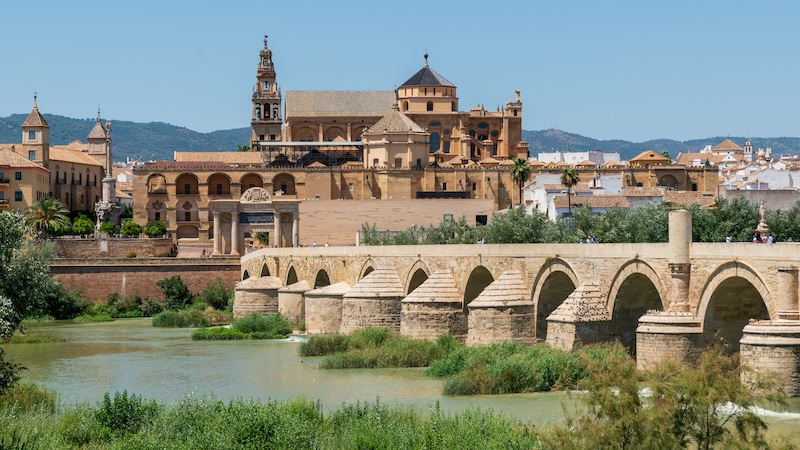
One of the most extraordinary monuments in the world, the Mosque-Cathedral of Córdoba is a UNESCO World Heritage Site featuring an awe-inspiring hypostyle hall with over 850 columns and iconic red-and-white double arches from the 8th century, with a Renaissance cathedral dramatically inserted into its center after the Christian reconquest.
Palacio de Viana (Viana Palace)
Must seeAttraction/Landmark
Known as the 'Museum of the Patios', the Palacio de Viana is a stunning aristocratic mansion featuring twelve magnificent courtyards and gardens, each with its own character and blooming with jasmine, orange trees, and geraniums, alongside richly furnished rooms displaying tapestries, paintings, porcelain, and leather craftsmanship.
Patios de Cordoba (Cordoba Cortyards) and San Basilio Patio 44
Must seeAttraction/Landmark
A UNESCO Intangible Cultural Heritage tradition, the famous patios of Córdoba are private courtyards overflowing with colorful flowerpots, especially during the May Patio Festival, and the San Basilio neighborhood south of the Alcázar preserves some of the most stunning examples, including the legendary Patio 44.
Puente Romano de Cordoba (Roman Bridge of Cordoba)
Must seeAttraction/Landmark
A magnificent 16-arched bridge spanning the Guadalquivir River, originally built by the Romans in the 1st century BC and rebuilt by the Moors in the 8th century, the Puente Romano connects the old town to the Calahorra Tower and is a UNESCO World Heritage Site offering iconic views of the Mosque-Cathedral at sunset.
Albolafia
Attraction/Landmark
A reconstructed medieval water wheel on the banks of the Guadalquivir River, the Albolafia was originally built during the Moorish era to lift water into the gardens of the Alcázar, and its iconic silhouette against the Roman Bridge has become one of the most emblematic images of Córdoba.
Archaeological Museum and Roman Theatre
Museum/Gallery
Housed in a Renaissance palace built over Roman remains, the Archaeological Museum showcases artifacts from prehistoric to medieval Córdoba, while the adjacent Roman Theatre — one of the largest in Hispania — has been partially excavated to reveal its seating rows and stage area dating from the 1st century AD.
Banos del Alcazar Califal (Caliphal Baths)
Attraction/Landmark
The beautifully preserved remains of 10th-century Umayyad baths from the Caliphate of Córdoba, featuring vaulted rooms with star-shaped skylights, cold, warm, and hot chambers following the Roman bathing tradition, and offering a rare glimpse into the sophisticated daily life of Al-Andalus.
Basilica de San Pedro (St. Peter Basilica)
Religious
One of Córdoba's fourteen Fernandine churches built after the Christian reconquest in the 13th century, the Basilica de San Pedro stands on the site where the Cordoban martyrs were executed during Moorish rule, featuring a Romanesque-Gothic portal, a Baroque main altar, and a serene cloister.
Basilica del Juramento de San Rafael (Basilica of the Oath to St. Rafael)
Religious
An 18th-century Baroque church dedicated to Córdoba's patron saint the Archangel Raphael, built on the exact spot where a priest claimed to have received a vision of the angel, featuring a richly decorated interior with jasper columns and a silver reliquary holding relics of San Rafael.
Calleja de las Flores (Alley of the Flowers)
Attraction/Landmark
Córdoba's most photographed street, this tiny dead-end alley overflows with colorful flowerpots hanging from whitewashed walls, opening to a small square with a fountain where you can frame the perfect shot of the Mosque-Cathedral's bell tower rising above the cascading geraniums.
Calleja del Panuelo (Handkerchief Alley)
Attraction/Landmark
One of the narrowest streets in Córdoba, the Calleja del Pañuelo is said to be so tight that a handkerchief can cover the sky when held at arm's length between its walls, ending in a tiny hidden square with a fountain, an orange tree, and a view of the Mosque-Cathedral's minaret.
Capilla Mudejar de San Bartolome (Chapel of St. Bartholomew)
Religious
A small but exquisite 14th-century Mudéjar chapel in the Jewish Quarter, featuring a stunning combination of Islamic-influenced geometric tilework, Gothic vaulting, and delicate plaster arabesques that perfectly embodies the unique cultural fusion of medieval Córdoba.
Casa Andalusi (Andalusian House Museum)
Museum/Gallery
A 12th-century house museum in the Jewish Quarter that recreates the domestic life of Al-Andalus, the Casa Andalusí features traditional Moorish architecture with a central courtyard, a paper-making workshop demonstrating medieval techniques, and a collection of coins from the Caliphate period.
Casa de Sefarad (House of Sefarad)
Museum/Gallery
A museum dedicated to the Sephardic Jewish heritage of Córdoba, housed in a 14th-century building facing the Synagogue, the Casa de Sefarad explores Jewish life, traditions, music, and women's roles in medieval Al-Andalus through five thematic rooms filled with artifacts and personal stories.
Centro de Conservacion Zoo Cordoba (Cordoba Zoo Conservation Center)
Parks & Gardens
A modern zoological garden and conservation center south of the city center, home to over 100 species in naturalistic enclosures, with a focus on endangered species breeding programs and environmental education set within the leafy grounds along the Guadalquivir River.
Convento de Santa Clara (Santa Clara Convent)
Religious
A former Franciscan convent converted from a medieval Moorish palace, the Convento de Santa Clara preserves stunning Islamic architectural elements including horseshoe arches, carved plasterwork, and a courtyard with traces of its original Almohad design beneath the later Christian additions.
Convento de Santa Cruz (Holy Cross Convent)
Religious
A 13th-century convent of the Dominican order in the eastern old town, the Convento de Santa Cruz features a simple Gothic church, a peaceful cloister, and a history intertwined with the Spanish Inquisition, as it once served as the seat of the Inquisition tribunal in Córdoba.
Convento de St. Marta (St. Marta Convent)
Religious
A cloistered Hieronymite convent dating from the 15th century, the Convento de Santa Marta is famous for the delicious pastries and sweets that the nuns still sell through a traditional revolving turnstile, continuing a centuries-old tradition of monastic confectionery in Córdoba.
Cristo de los Faroles (Christ of the Lanterns)
Attraction/Landmark
One of Córdoba's most beloved monuments, the Cristo de los Faroles is a crucified Christ figure surrounded by eight wrought-iron lanterns in a hidden square within the walls of the Capuchinos convent, creating an atmosphere of profound devotion that is especially moving when illuminated at night.
Cuesta del Bailio (Bailio Slope)
Attraction/Landmark
A charming stepped street climbing through the northern old town, the Cuesta del Bailío features a monumental staircase with a central water channel, whitewashed walls adorned with flowerpots, and archaeological remains of Roman and Arab origin visible at its base, exemplifying the layered history of Córdoba.
El Zoco Municipal Souk
Shopping
A traditional artisan market in the Jewish Quarter occupying a charming courtyard surrounded by workshops, the Zoco Municipal is where local craftspeople sell handmade Córdoban leather goods, silver filigree jewelry, ceramics, and other traditional crafts that have been practiced in the city for centuries.
Iglesia Santa María Magdalena (St. Mary Magdalene Church)
Religious
A 13th-century Fernandine parish church that preserves its original Romanesque-Gothic character, the Church of Santa María Magdalena features a beautiful rose window, a fortified bell tower, and interior columns likely reused from the earlier mosque that stood on this site.
Iglesia de San Lorenzo (St. Lawrence Church)
Religious
One of the finest Fernandine churches in Córdoba, the Church of San Lorenzo stands out for its magnificent rose window — the largest of its kind in the city — its converted minaret bell tower, and a striking portico with three pointed arches that blend Gothic and Mudéjar influences.
Iglesia de San Miguel (St. Michael Church)
Religious
A 13th-century Fernandine church in the commercial heart of Córdoba, the Church of San Miguel features a fortress-like exterior, a Gothic nave, and a Baroque chapel added later, standing near the busy Plaza de las Tendillas as a testament to the Christian transformation of the medieval city.
Iglesia de San Nicolas de la Villa (Church of St. Nicholas de la Villa)
Religious
A Fernandine church distinguished by its unique octagonal minaret-turned-bell-tower, the Church of San Nicolás de la Villa was built in the 13th century and features a blend of Gothic and Mudéjar elements, with a striking lateral portal and a serene interior that reflects the cultural crossroads of medieval Córdoba.
Iglesia de San Pablo (St. Paul Church)
Religious
A 13th-century church originally built for the Dominican order, the Church of San Pablo combines Romanesque, Gothic, and Baroque styles across its centuries of modifications, with a notable Mannerist main portal and an interior housing important religious sculptures and paintings from the Córdoban school.
Iglesia de San Pedro de Alcantara (Church of St. Peter of Alcantara)
Religious
A 17th-century Baroque church in the Jewish Quarter belonging to the Franciscan order, the Church of San Pedro de Alcántara features a richly decorated interior with gilded altarpieces and elaborate stucco work, dedicated to the ascetic reformer saint who founded the Discalced Franciscans.
Iglesia de Santa Marina (St. Marina Church)
Religious
One of the oldest Fernandine churches in Córdoba, the Church of Santa Marina stands in the traditional bullfighting quarter and features a fortress-like facade with Gothic rose windows, a beautiful Mudéjar ceiling, and the nearby statue of the legendary bullfighter Manolete who grew up in these streets.
Iglesia de la Trinidad (Trinity Church)
Religious
A Baroque church dating from the 18th century with a striking twin-towered facade, the Church of the Trinity houses an impressive collection of religious art and sculptural work, standing in the western part of the old town as one of Córdoba's most visually dramatic church exteriors.
Jardines de la Victoria (Victoria Gardens)
Parks & Gardens
A beautiful public park on the western edge of the old town, the Jardines de la Victoria offer shaded walkways beneath mature trees, ornamental fountains, and a café terrace, with the nearby Victoria Market providing a perfect complement for a relaxing afternoon in the leafy heart of Córdoba.
Jardines del Alcázar (The Gardens of the Alcazar)
Attraction/Landmark
The magnificent terraced gardens of the Alcázar stretch south along the Guadalquivir River with geometric hedges, long reflecting pools, splashing fountains, and fragrant orange and cypress trees, creating a stunning blend of Moorish and Renaissance garden design that is especially magical when illuminated on summer nights.
Maimónides Square and Statue
Attraction/Landmark
A small square at the entrance to the Jewish Quarter featuring a bronze statue of Moses Maimonides, the great 12th-century Jewish philosopher, physician, and theologian born in Córdoba, whose foot visitors traditionally rub for good luck, set against the whitewashed walls and the Synagogue nearby.
Mausoleo Romano (Roman Mausoleum)
Attraction/Landmark
A 1st-century AD cylindrical Roman funerary monument discovered in the western part of the city, the Roman Mausoleum is one of the best-preserved examples of its type in Spain, featuring a two-story stone structure that once held the ashes of a prominent Roman family from Corduba.
Medina Azahara
Museum/Gallery
The breathtaking ruins of a 10th-century palatial city built by Caliph Abd al-Rahman III on the outskirts of Córdoba, Medina Azahara was once the dazzling administrative capital of Al-Andalus, now a UNESCO World Heritage Site revealing exquisitely carved marble halls, gardens, and ceremonial chambers across its vast terraced hillside.
Mercado Victoria (Victoria Market)
Shopping
A trendy gourmet food hall housed in a restored 19th-century iron pavilion in the Victoria Gardens, the Mercado Victoria offers a curated selection of tapas bars, wine stalls, and artisan food vendors where visitors can sample local Córdoban specialties like salmorejo, flamenquín, and Montilla-Moriles wines.
Mercado de Sanchez Pena (Sanchez Pena Market)
Shopping
A traditional neighborhood market near the Plaza de la Corredera where locals shop for fresh produce, meats, fish, and regional delicacies, the Mercado de Sánchez Peña offers an authentic glimpse into daily Córdoban life away from the tourist crowds of the old town.
Murallas Romana de Cordoba (Roman Walls of Cordoba)
Attraction/Landmark
Scattered sections of the ancient Roman walls that once encircled Corduba, the Roman Walls of Córdoba are visible at several points around the old town, with the best-preserved stretches found near the Puerta de Almodóvar, revealing massive stone blocks and defensive towers dating from the 1st century BC.
Museo Julio Romero de Torres (Julio Romero de Torres Museum)
Museum/Gallery
A museum dedicated to Córdoba's most beloved painter, Julio Romero de Torres, whose sensual portraits of Andalusian women with dark gazes and symbolic backgrounds became icons of early 20th-century Spanish art, housed in a former hospital building on the Plaza del Potro.
Museo Taurino (Bullfighting Museum)
Museum/Gallery
A museum in the Jewish Quarter celebrating Córdoba's deep bullfighting tradition, the Museo Taurino displays costumes, posters, photographs, and personal belongings of legendary Córdoban matadors including Manolete, Lagartijo, and Guerrita, tracing the history of tauromachy in the city.
Museo de Bellas Artes de Cordoba (Fine Arts Museum of Cordoba)
Museum/Gallery
Housed in a former charity hospital on the Plaza del Potro, the Fine Arts Museum of Córdoba holds an impressive collection of Spanish paintings and sculptures from the medieval period to the 20th century, including works by Zurbarán, Valdés Leal, and Muñoz Lucena in its elegant Renaissance courtyard building.
Palacio de la Merced (Palace of Mercy)
Attraction/Landmark
A magnificent 18th-century Baroque palace originally built as a Mercedarian convent, now serving as the seat of the Córdoba Provincial Government, the Palacio de la Merced features an impressive marble facade, an elegant cloister, and richly decorated salons with ceiling frescoes and ornate plasterwork.
Plaza de Las Tendillas (Tendillas Square)
Attraction/Landmark
The main commercial square of modern Córdoba, the Plaza de las Tendillas is a bustling hub surrounded by shops and cafes, dominated by a bronze equestrian statue of the Gran Capitán Gonzalo Fernández de Córdoba, and notable for its unusual clock that chimes with guitar strums instead of bells.
Plaza de la Corredera (Corredera Square)
Attraction/Landmark
The only rectangular enclosed plaza in Andalusia, modeled after Castilian main squares, the 17th-century Plaza de la Corredera was once used for bullfights, executions, and markets, now ringed by colorful arcaded buildings housing tapas bars, with Roman mosaics discovered beneath its pavement on display at the Alcázar.
Plaza del Cardenal Salazar (Cardenal Salazar Square)
Attraction/Landmark
A tranquil square in the heart of the old town near the Mosque-Cathedral, the Plaza del Cardenal Salazar is flanked by the former Hospital del Cardenal Salazar, now a university faculty building, and offers a peaceful atmosphere with orange trees and a fountain, perfect for resting between sightseeing.
Plaza del Potro (Colt Square)
Attraction/Landmark
A historic square mentioned by Cervantes in Don Quixote, the Plaza del Potro takes its name from the small colt fountain at its center and is flanked by the Fine Arts Museum, the Julio Romero de Torres Museum, and the Posada del Potro inn, preserving the atmosphere of medieval Córdoba.
Posada del Potro (Potro Inn)
Attraction/Landmark
A beautifully restored 15th-century inn on the Plaza del Potro, the Posada del Potro is the very establishment mentioned by Cervantes in Don Quixote, now converted into a center for live flamenco performances with a charming galleried courtyard where travelers once rested on their journeys through Andalusia.
Puerta de Almodovar (Almodovar Gate)
Attraction/Landmark
The best-preserved gate of the medieval city walls, the Puerta de Almodóvar marks the western entrance to the Jewish Quarter with its imposing stone archway flanked by defensive towers, a statue of the philosopher Seneca nearby, and a stretch of intact walls running alongside it.
Puerta del Puente (Gate of the Bridge)
Attraction/Landmark
A monumental Renaissance triumphal arch built in 1572 to honor King Philip II's visit to Córdoba, the Puerta del Puente stands at the northern end of the Roman Bridge as the ceremonial entrance to the city, framing dramatic views of the bridge and the Calahorra Tower beyond.
Real Jardin Botanico de Cordoba (Royal Botanical Garden of Cordoba)
Parks & Gardens
A peaceful botanical garden along the Guadalquivir River showcasing the rich plant diversity of the Mediterranean region, the Royal Botanical Garden features themed areas including an ethnobotanical garden, a greenhouse with tropical species, an arboretum, and a museum of paleobotany with fossilized plants.
Sinagoga de Cordoba (Cordoba Synagogue)
Religious
One of only three surviving medieval synagogues in Spain, the Córdoba Synagogue was built in 1315 in Mudéjar style and features exquisite plaster arabesques with Hebrew inscriptions, a women's gallery, and a small prayer hall that testifies to the vibrant Jewish community that once thrived in the city.
Templo Romano (Roman Temple)
Attraction/Landmark
The impressive remains of a 1st-century AD Roman temple standing in the middle of a modern street, the Templo Romano features eleven reconstructed Corinthian columns rising dramatically above the surrounding buildings, believed to have been dedicated to the imperial cult and serving as the most visible Roman monument in Córdoba.
Torre De Calahorra (Calahorra Tower)
Attraction/Landmark
A fortified gate tower of Islamic origin at the southern end of the Roman Bridge, the Torre de la Calahorra was strengthened by Henry II of Castile in the 14th century and now houses the Museum of Al-Andalus Life, exploring the cultural coexistence of Muslims, Christians, and Jews in medieval Córdoba.
Triunfo de San Rafael (Triumph of San Raphael)
Attraction/Landmark
An ornate 18th-century Baroque column monument dedicated to the Archangel Raphael, patron saint of Córdoba, the Triunfo de San Rafael stands prominently beside the Mosque-Cathedral and the Roman Bridge, one of several such triumphal columns scattered throughout the city honoring the city's celestial protector.