Ávila
12 points of interest
Avila Cathedral
Must seeReligious
Spain's first Gothic cathedral and a fortress-church whose apse is built directly into the city walls, the Cathedral of Ávila blends military and religious architecture with a striking granite exterior, a luminous interior housing masterful Renaissance altarpieces, and a museum with an El Greco painting.
Basilica de San Vicente (Basilica of Saint Vincent)
Must seeReligious
Ávila's finest Romanesque church and one of the best examples of the style in all of Spain, the Basilica of San Vicente was begun in the 12th century on the site where three siblings were martyred, featuring a magnificent polychrome cenotaph depicting their story and a stunning Romanesque-Gothic west portal.
Mirador de los Cuatro Postes (Viewpoint of the Four Posts)
Must seeAttraction/Landmark
A simple yet iconic monument of four granite columns topped by a cross, perched on a hilltop across the Adaja River, the Cuatro Postes offers the most spectacular panoramic view of Ávila's walled city and is said to mark the spot where the young Teresa of Ávila was caught by her uncle while trying to run away to seek martyrdom.
Murallas (Town Walls)
Must seeAttraction/Landmark
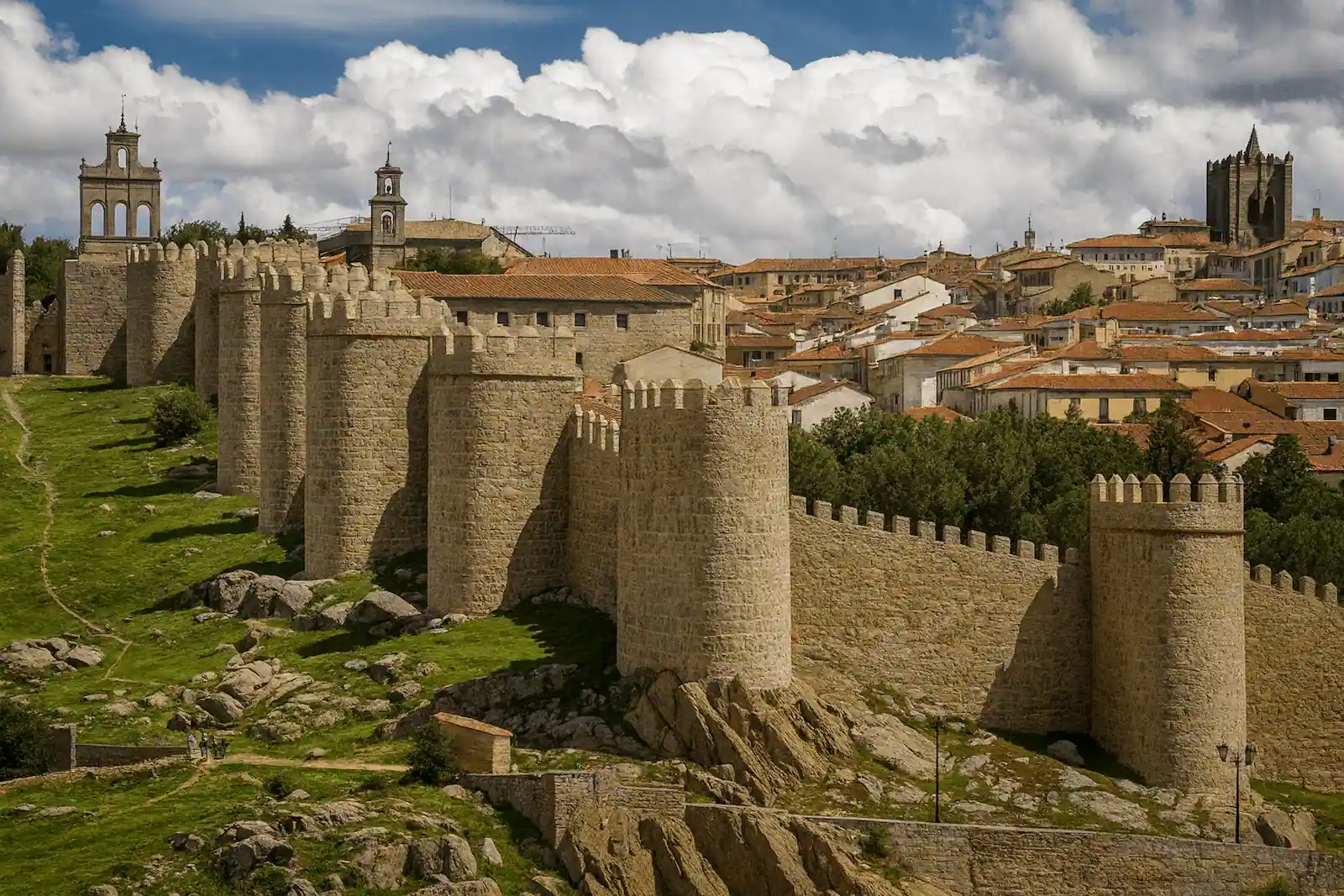
The best-preserved medieval city walls in all of Europe, Ávila's stunning fortifications stretch 2.5 kilometers around the old town, rising 12 meters high with 88 semicircular towers and 9 gates, built in the 11th century and now a UNESCO World Heritage Site with a walkable rampart offering sweeping views.
Convento de Santa Teresa (Convent of Saint Teresa)
Religious
Built in 1636 on the exact site where Saint Teresa of Ávila was born, this Baroque convent and church is a major pilgrimage destination, housing relics of the mystic saint, a museum dedicated to her life, and a chapel marking the room where she came into the world in 1515.
Iglesia San Pedro (St. Peter's Church)
Religious
A handsome Romanesque church standing outside the city walls on the Plaza del Mercado Grande, the Church of San Pedro dates from the 12th century and features a beautiful rose window on its facade, a triple-arched entrance, and a serene interior with slender columns and pointed arches.
Palacio de los Davila (Davila Palace)
Attraction/Landmark
A striking fortified noble residence built between the 13th and 15th centuries, the Palacio de los Dávila is actually a complex of four interconnected houses leaning against the city walls, showcasing the transition from Romanesque to Gothic architecture and the power of one of Ávila's most prominent medieval families.
Plaza del Mercado Chico (Little Market Square)
Shopping
The main square and social hub of Ávila since medieval times, the Plaza del Mercado Chico sits at the heart of the walled city and is flanked by the Town Hall and the Church of San Juan, hosting a lively weekly market and serving as the gathering place for festivals and local celebrations.
Plaza del Mercado Grande (Big Market Square)
Attraction/Landmark
A spacious plaza just outside the city walls at the foot of the Alcázar Gate, the Plaza del Mercado Grande is framed by the Romanesque Church of San Pedro and the grand Puerta del Alcázar, serving as a popular meeting point with its outdoor cafes and views of the illuminated walls at night.
Puerta del Alcazar (Alcazar Gate)
Attraction/Landmark
The most monumental of Ávila's nine gates, the Puerta del Alcázar is flanked by two massive 20-meter towers connected by a bridge arch, serving as the main ceremonial entrance to the walled city since the 11th century and providing access to the walkable section of the ramparts.
Puerta del Peso de la Harina (Flour Weight Gate)
Attraction/Landmark
One of the lesser-known gates in Ávila's medieval walls, the Puerta del Peso de la Harina takes its name from the flour weighing station that once operated here, offering a quieter passage into the old town and a glimpse into the commercial activities that sustained the city for centuries.
Real Monasterio de Santo Tomás (Royal Monastery of St. Thomas)
Religious
A grand 15th-century Dominican monastery commissioned by the Catholic Monarchs Ferdinand and Isabella, featuring three stunning cloisters, a Gothic church housing the alabaster tomb of Prince Juan, and a museum of Oriental art, once serving as a summer palace for the Spanish royal court.